As the crow flies, Yosemite Village, which is the epicenter of tourism within the Yosemite Valley, is about 70 miles northeast of downtown Fresno, at an elevation of 3,500′. Now, I don’t like the word “valley,” because, here, Yosemite National Park’s more like a canyon. However, so as not to confuse people, I’ll just use “valley” like everyone else. And, at the bottom of the Yosemite Valley flows the Merced River, which starts as trickling snowmelt from Sierra crags rising up to 13,000′. The spine of the Sierras here can see thirty feet of snow in winter. Sometimes they can see twice that.
After the Merced leaves the Yosemite Valley, and continues westward into that Kansas-part of California, the Central Valley, it then flows into the San Joaquin River, which is flowing northward out of Fresno. The San Joaquin then flows north into the Sacramento River, which then flows west into San Francisco Bay. From the Pacific, salmon used to run all the way up the Merced to the Vernal Falls where they couldn’t run any more. Along that River of Mercy, in the valley floor, Miwoks foraged for abundant acorns, berries and fruits. Cedar, pine, fir and oak grew in large swathes, broken up by meadows redounding with turkey, deer, fox, elk, bear and other critters. Add the rushing sound of waterfalls, and you can imagine those Miwoks loved this land deeply.
Of course, this was not to last. Everything changed with the mass arrival of Anglo-Americans looking for gold across the Sierras. It’s not really known who exactly the first white man was who saw Yosemite, though it was probably exploring-mountain-man Joseph Walker in the 1833, and it was probably only from the top. Regardless, by 1849, 49ers started infringing on game, space and other resources that, naturally, indigenous folk of California thought they had right to, and of course they did. The white use of natural resources led to some being killed by Indians, and this led to disaste
As result of violence between Miwok and Anglo, the Californians of the newly-formed Mariposa County organized themselves into a 200-man army. Their purpose was to drive out the Miwoks from their ancestral homelands. This was known as the Mariposa War, during which the whites, mounted and armed, first entered into the Yosemite Valley. A soldier named Bunnell remarked on a thousand-foot waterfall. This remark would later arrive at the ears and set a fire in the imagination of a man named Hutchings who, in 1855, explored the Valley and discovered that Yosemite Falls was, in fact, over 2,000′ high.
The Mariposa War finally concluded in 1853. Now, I’d not dismiss brutalities and atrocities committed by whites to whitewash history. I’d also not dismiss such by Indians either. It’s that now is not the time to delve fully into this dynamic in American history. The point to be gleaned is that Bunnell’s first printed description of Yosemite Valley attracted other explorers, and begat other printed descriptions of its wonders. After 1855, more and more people began to trickle into this wonderland.
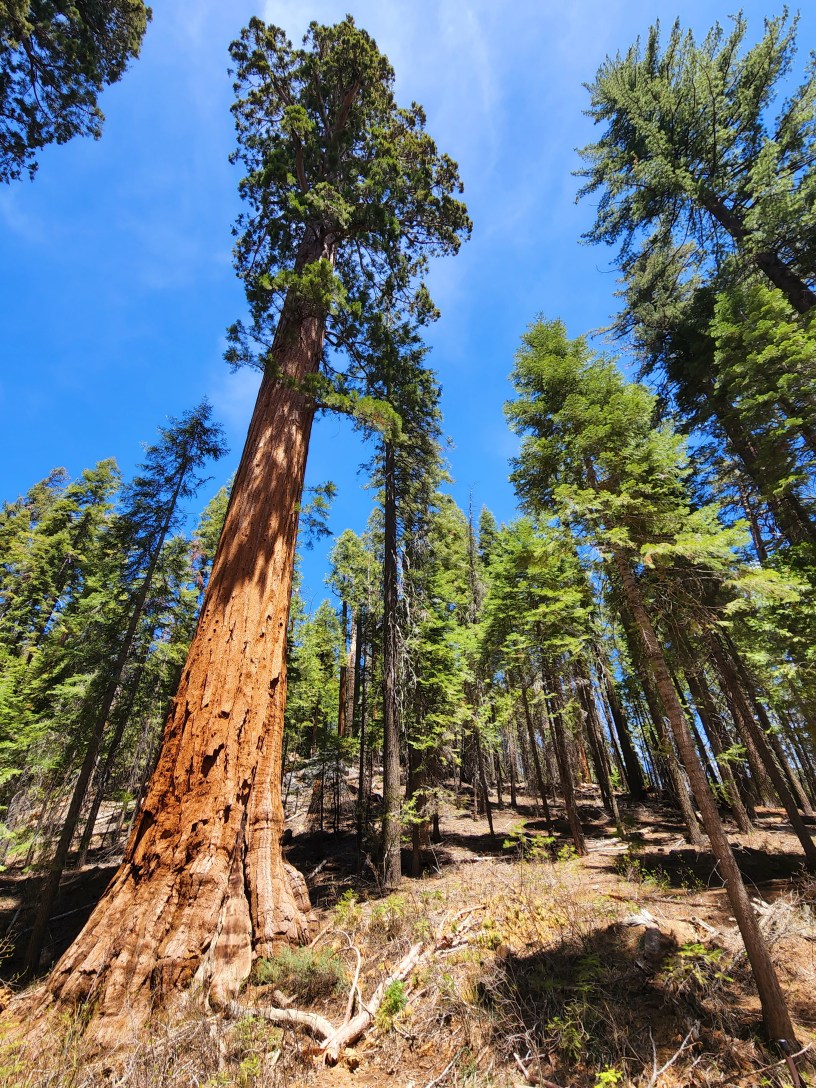
From these initial tourists, writers and artists arose a notion new to Western Man, that is, conservationism. It was becoming believed that the Mariposa Grove of sequoias, along with the Yosemite Valley itself, should be set aside, forever, as a park. It was feared that unhindered free-enterprise would decimate the land and deprive future generations of these natural marvels, marvels God intended all to see into the future.
 Charles Torello