(See my photos at the bottom of this page!)
Vegas is interesting. No, I don’t gamble or debauch myself. I don’t give a damn about shows or ornate strip malls called casinos.
Well, I was curious to see “The Sphere” – that huge dome whose exterior skin is a large IMAX.
So, on Thursday the 11th of December in the year of our Lord 2025, I drove from Lake Mead National Recreation Area to Las Vegas. My first destination was the Sphere
It was ok. The day was sunny and bright (and an incredibly pleasant 70 degrees). I could barely see its exterior videos. The sphere must obviously light up better at night.
And that was enough of Las Vegas. One jour of its traffic was PLENTY.
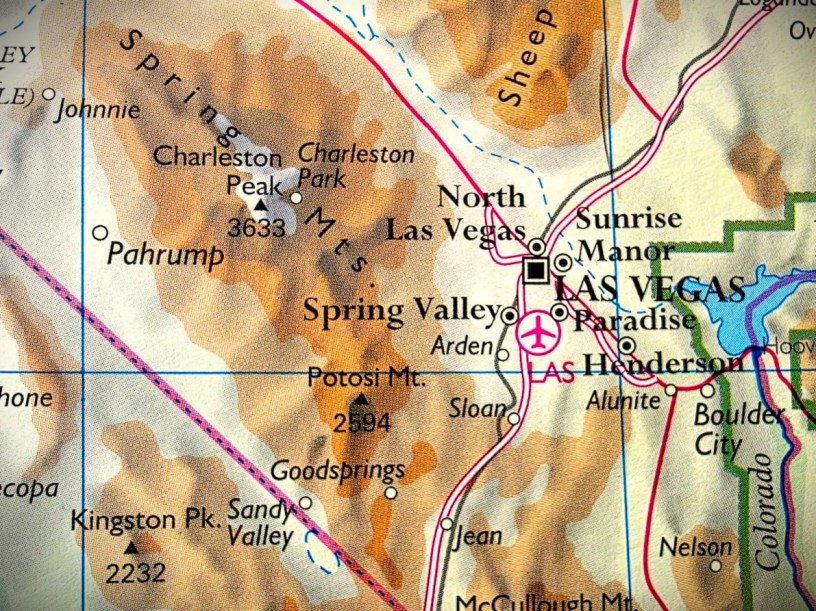
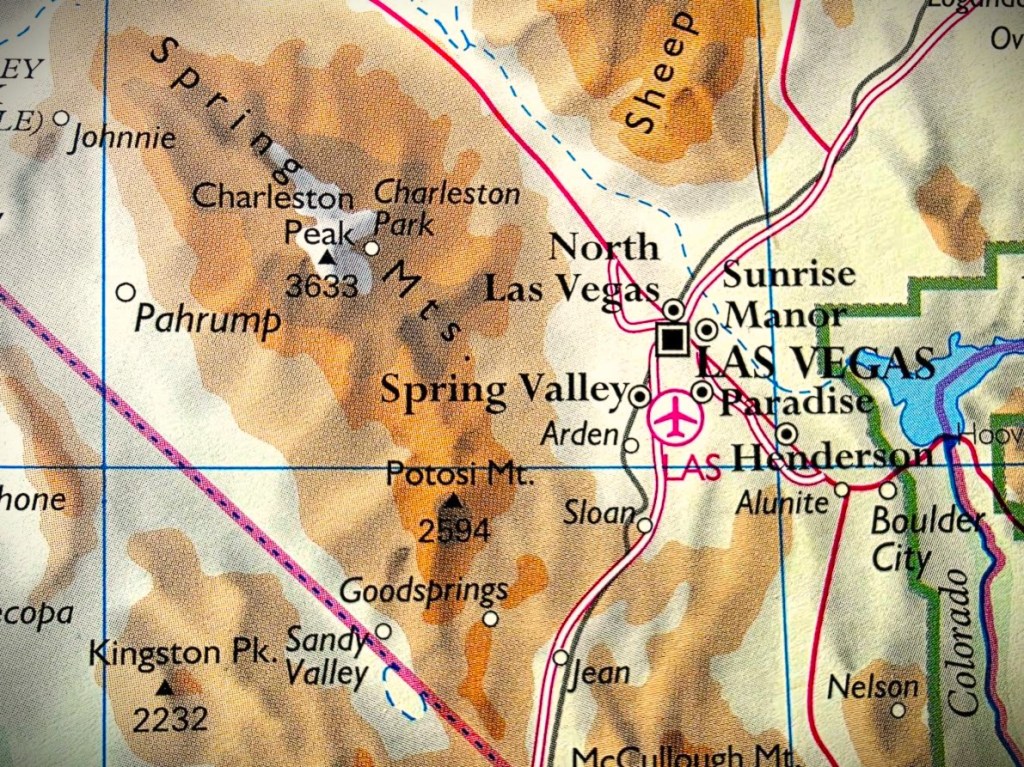
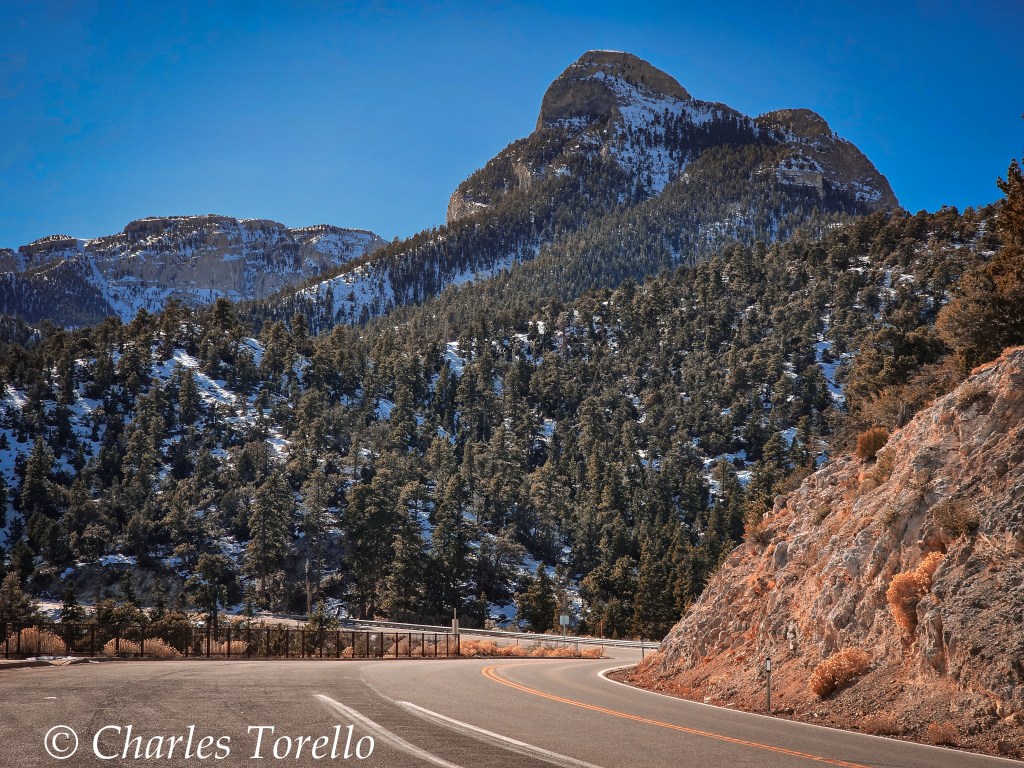
My second destination, thereafter, was the Spring Mountains. They’re about 30 miles west of the Bellagio as the raven flies. The tallest peak is Mt. Charleston which is 11,900′. Other peaks top out over 10,000′.
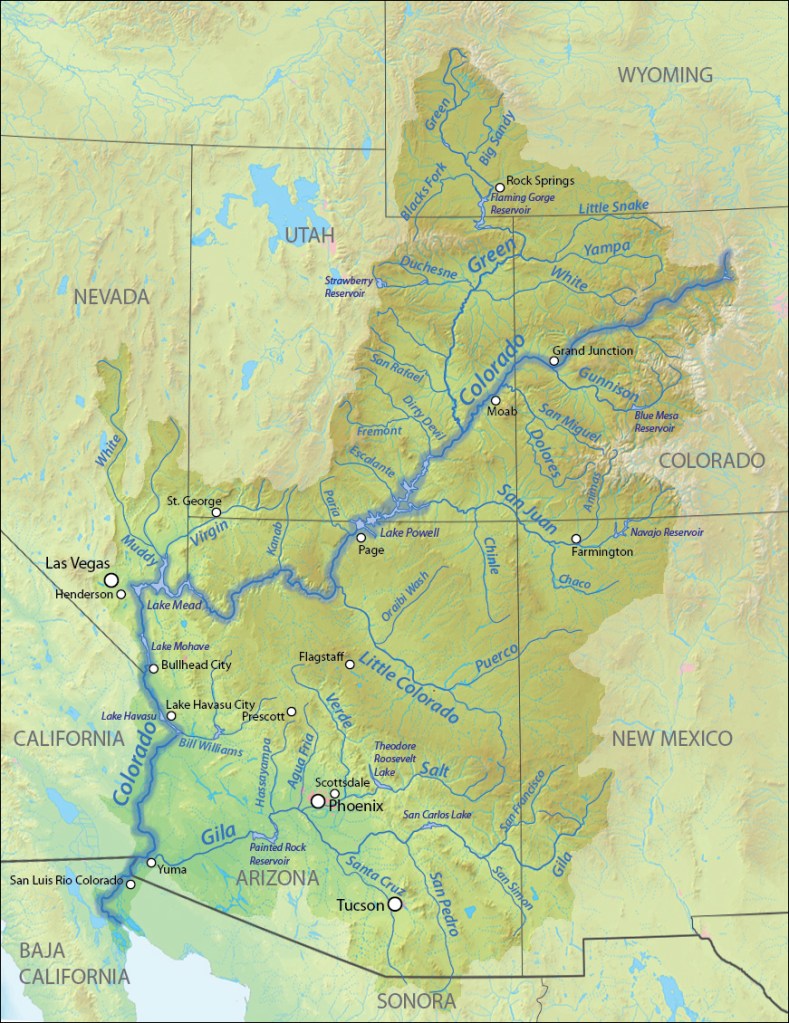
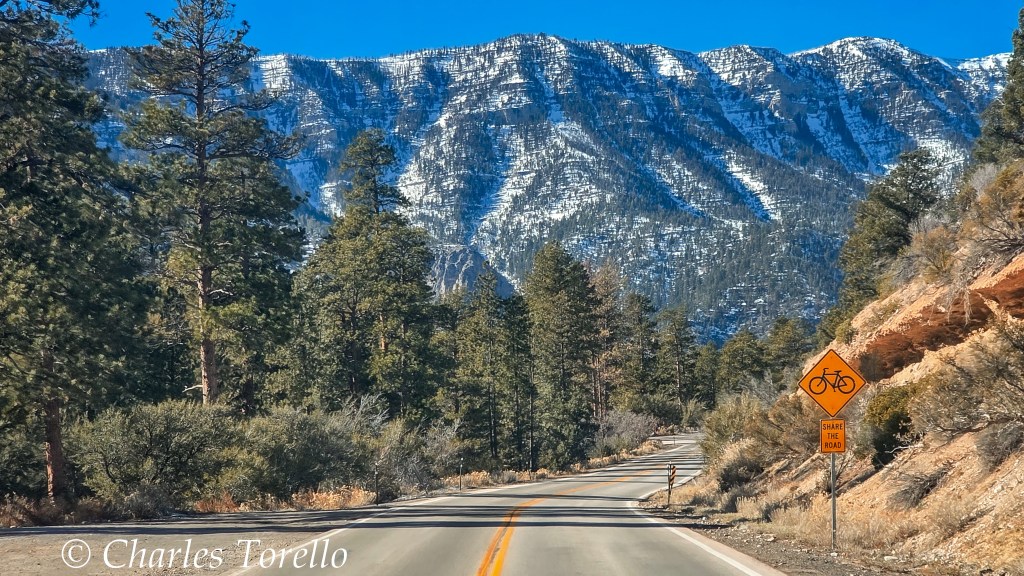
Those are big mountains. Snow was in their higher elevations. The snowmelt on the eastern side – the Vegas side – of the Spring Mountains flows into the Las Vegas Wash, which can intermittently still flow into the Colorado River Basin.
The eastern side of the Springs is the furthest west portion of the Colorado River Basin, at least within the United States. (The western side – the Pahrump, Nevada side – is one of the many endoheric basins of the Great Basin.)
I hadn’t taken the scenic drive through the Springs since 2007. They left a unique impression then, on a big road trip I once took. Ivwanted to feel their impression now.
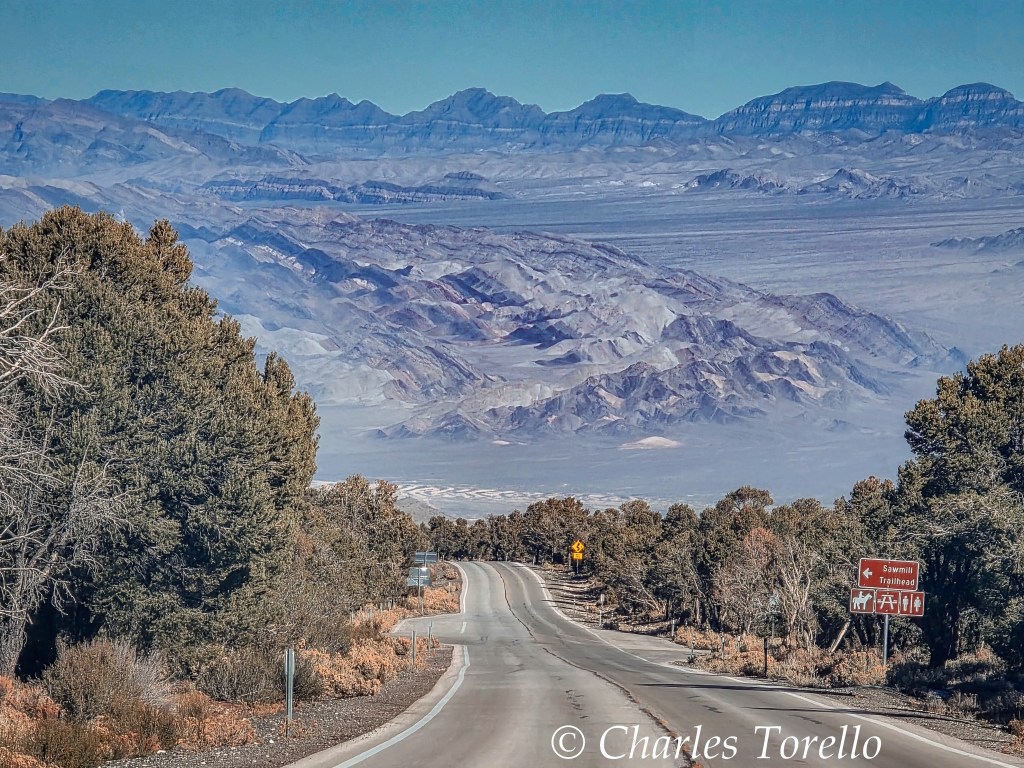
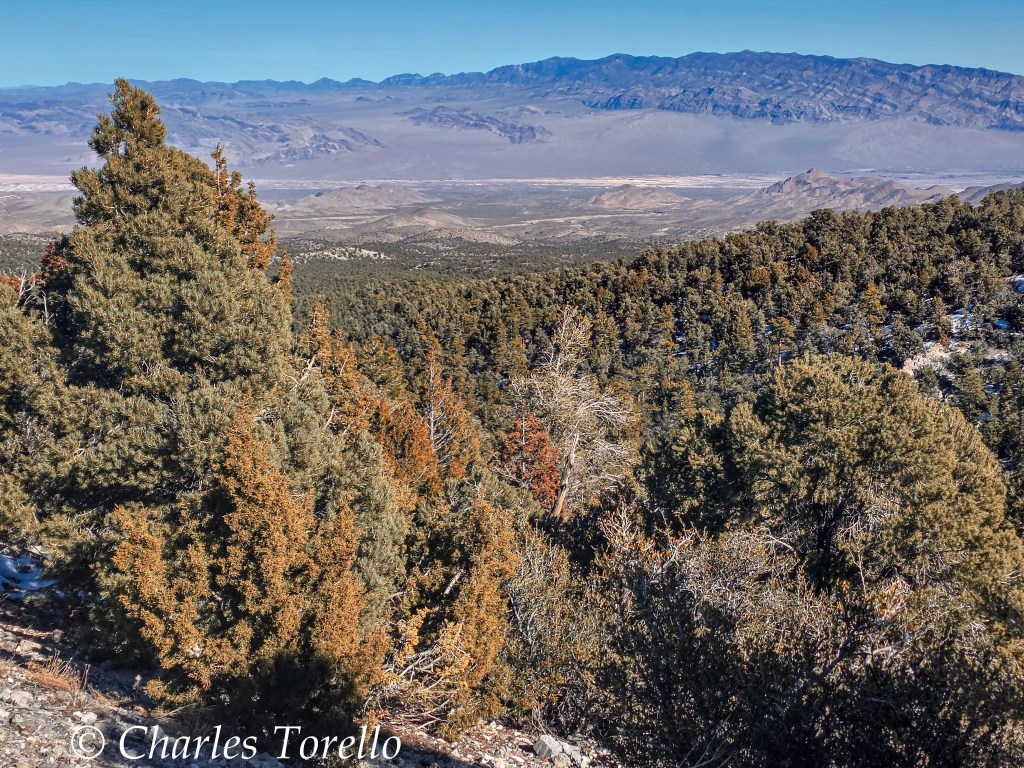
Ski runs are there. Interesting. The best part of the Springs, though, are the vast views of the desert below and the mountains to all horizons. For perhaps over 100 miles one can see the confounding brown and purple landscape of the Mojave Desert.
To me it makes sense why Las Vegas – “the meadows” in Spanish – was a marshy area with lots of springs once upon a time. The Springs and other mountains around Vegas drained good amounts of moisture into the Vegas Valley once upon a time. The snow fell a helluva lot more once upon a time.
The aberration of spring-fed, green meadows in the middle of this Southwestern desert attracted Mormon settlers in 1855. Now Vegas is something else entirely.
Then, I drove to Death Valley, my final destination of the day..



 Charles Torello