IF YOU WANT TO LOOK AT THE PRETTY PICTURES, AND NOT LEARN ANYTHING, SCROLL TO THE BOTTOM.
HOWEVER, IF YOU DO WANT TO LEARN SOMETHING…
Let me first explain what an aquifer is. It’s a body of underground water.
Now, rain and snow falling on the surface of the earth, wherever it be, can do, essentially, three things.
The moisture can evaporate; the moisture can drain into a creek or river; the moisture can percolate down below the surface of the earth to an impervious layer of bedrock, and collect on top of that impervious layer over time, and remain there, and grow to form of an aquifer.
From that aquifer, springs often spring from the earth to give life to creeks and rivers. Such is the case with the Rivers of the Texas Hill Country. Such is the case in Sedona.
The aquifer below Sedona is called the Coconino Aquifer. It gives life to a stream called Oak Creek which flows all year. According to some Old Timers (those who saw Sedona’s Red Rocks in the 1960’s and beforehand), the flow of Oak Creek has diminished over the years.
Sedona and Flagstaff get their municipal water from the Coconino Aquifer. The growth of these cities’ populations, accompanied by the growth of tourism, has helped to diminish the aquifer and thus the flow of Oak Creek.
Now, I do wonder how much now-normally-dry streams like Casner Creek, a tributary of Oak Creek, used to flow before the explosion of growth and tourism in Sedona and Flagstaff. I wonder if it would flow all year round in, say, the 19th Century.
I don’t know. No doubt, once, there were more perrenial streams in Arizona, and all across the West. But those days are gone.
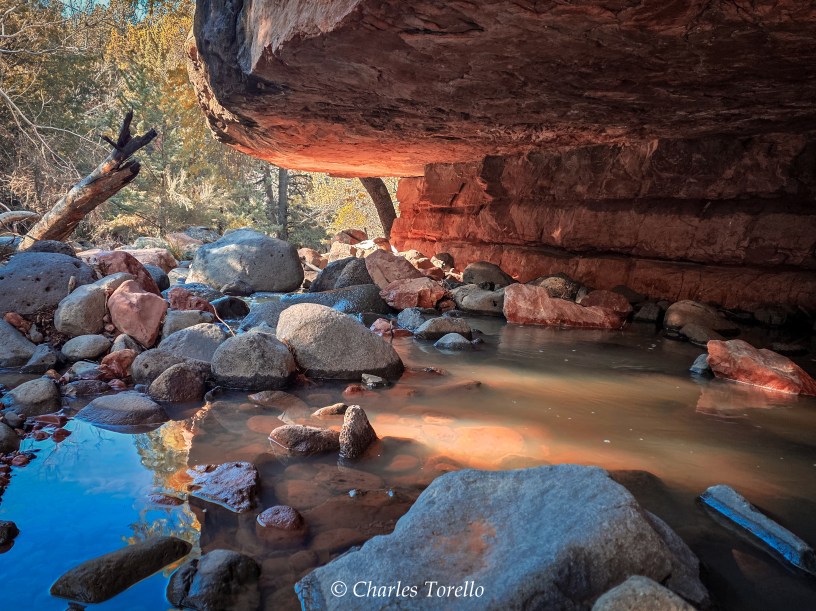
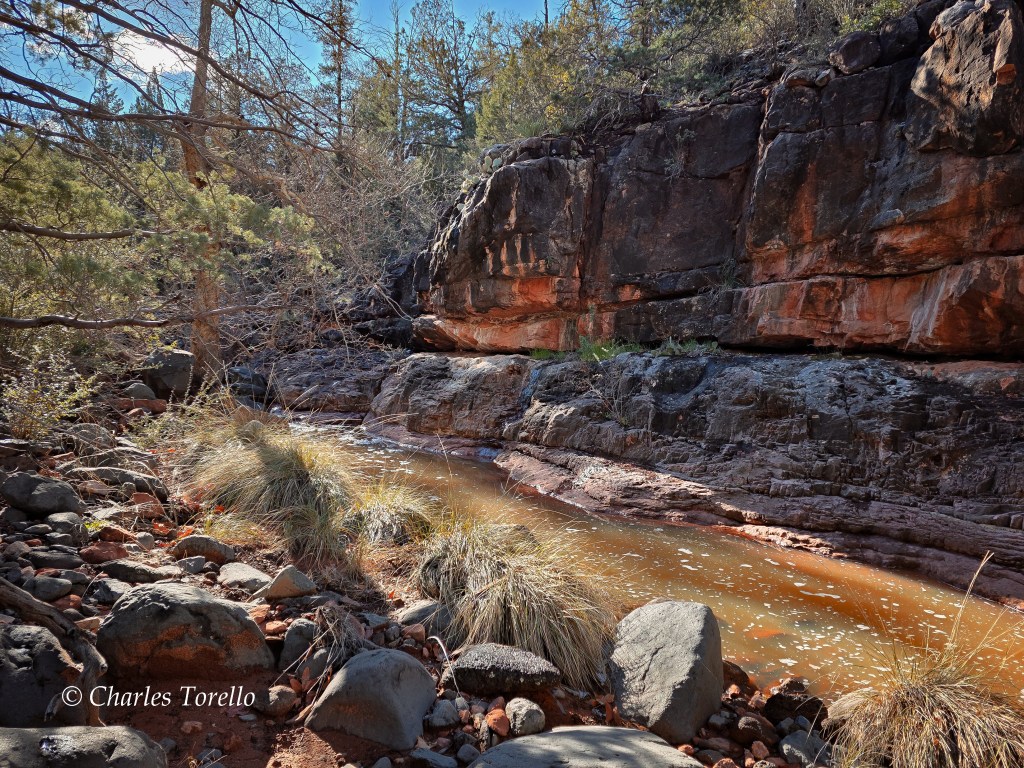
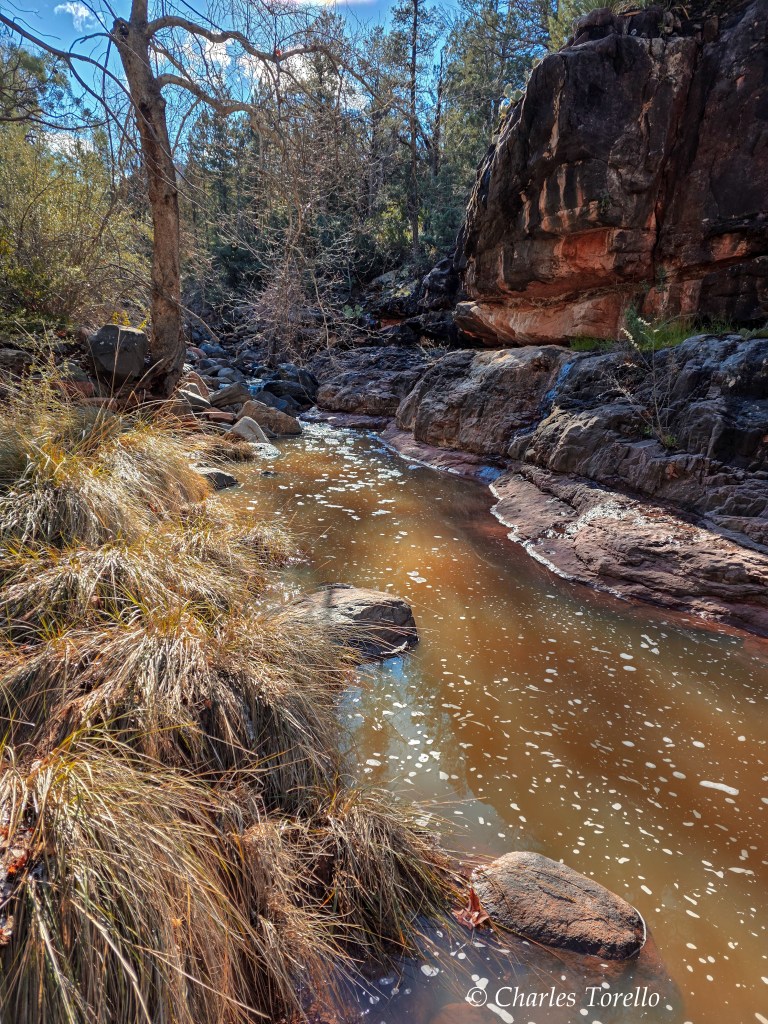
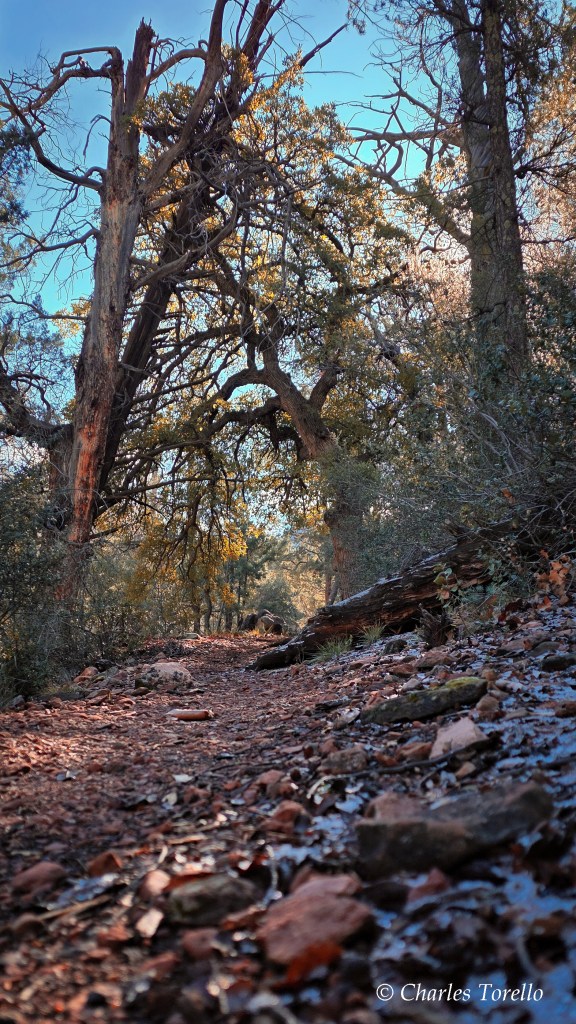
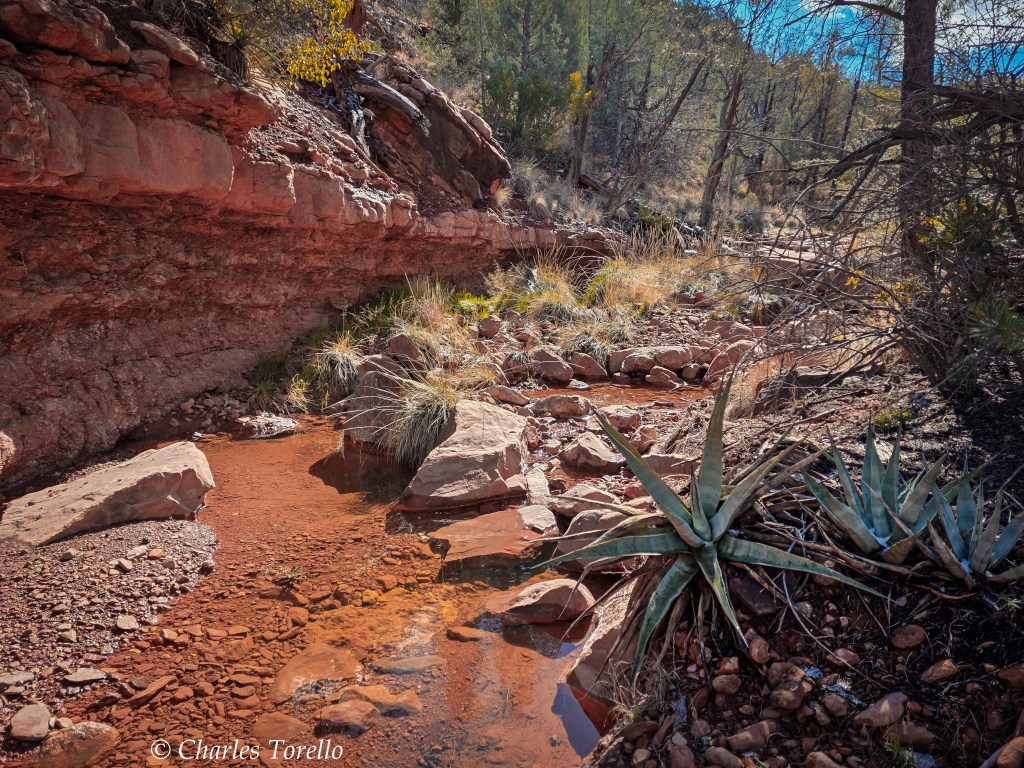
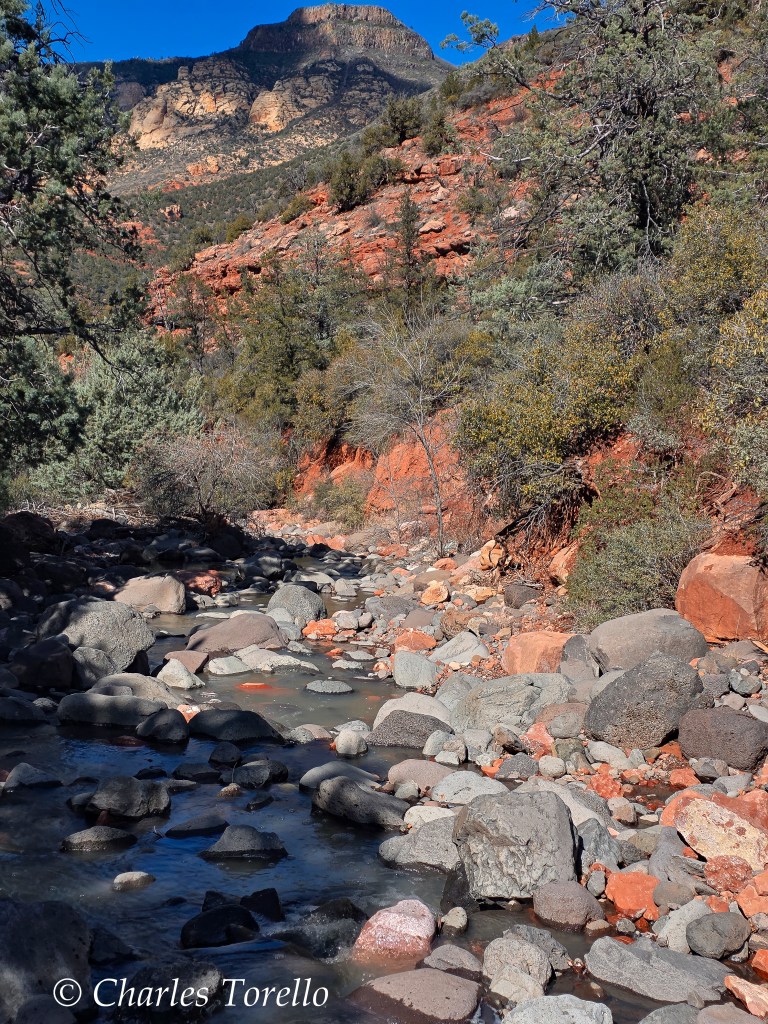
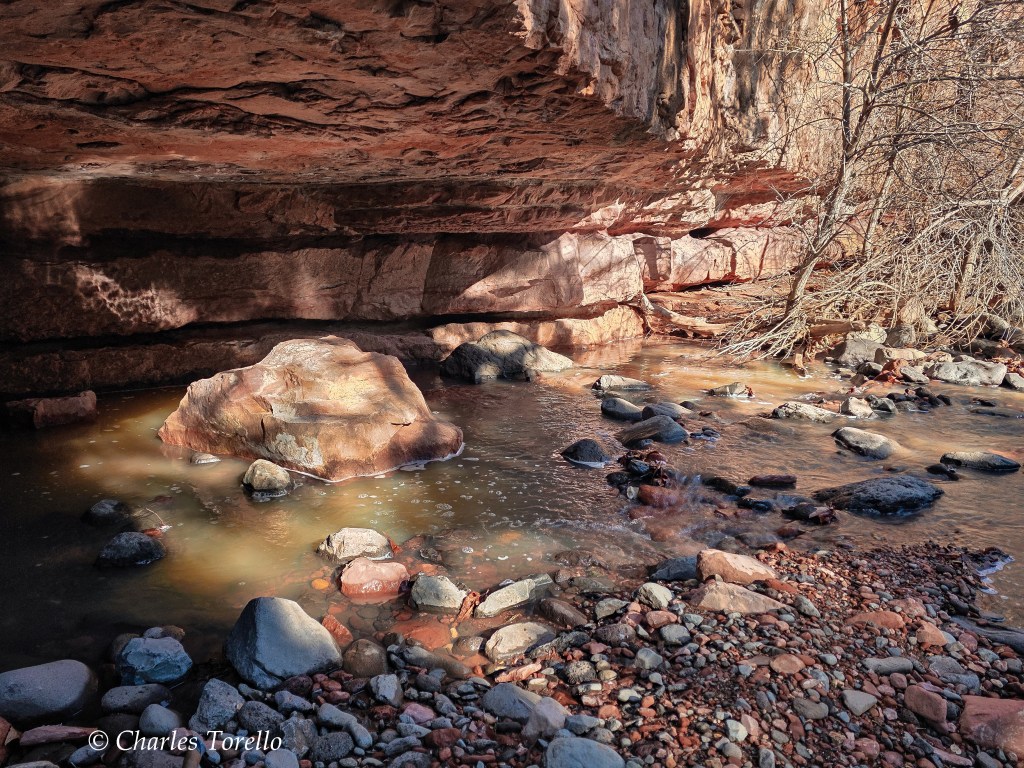
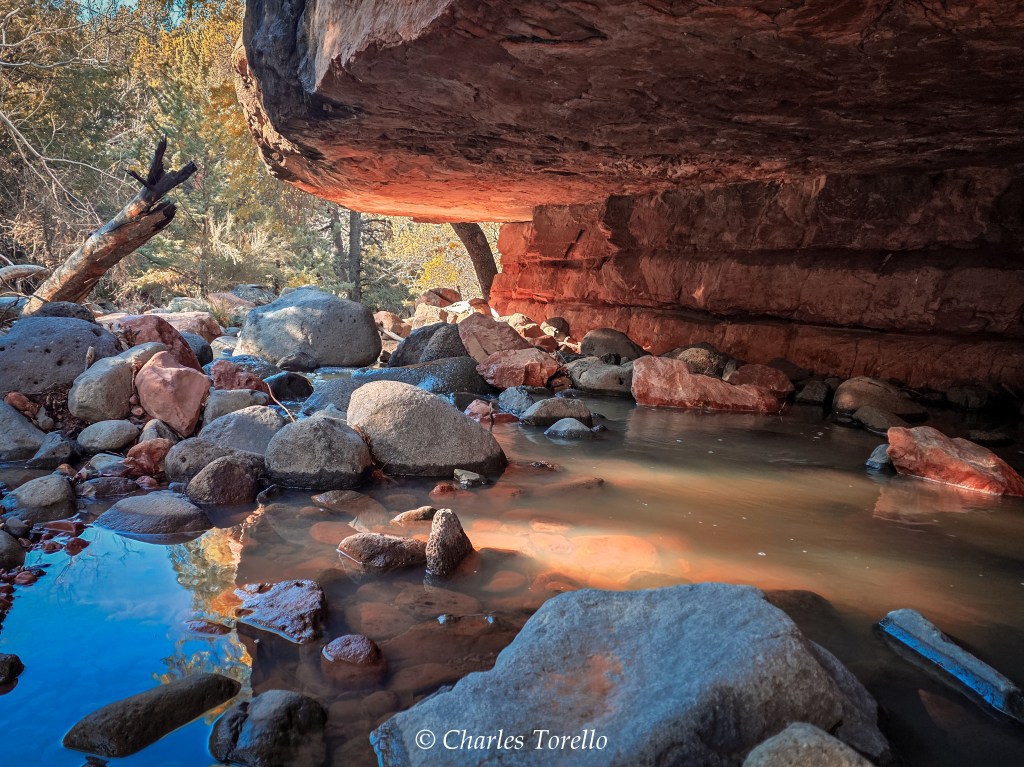
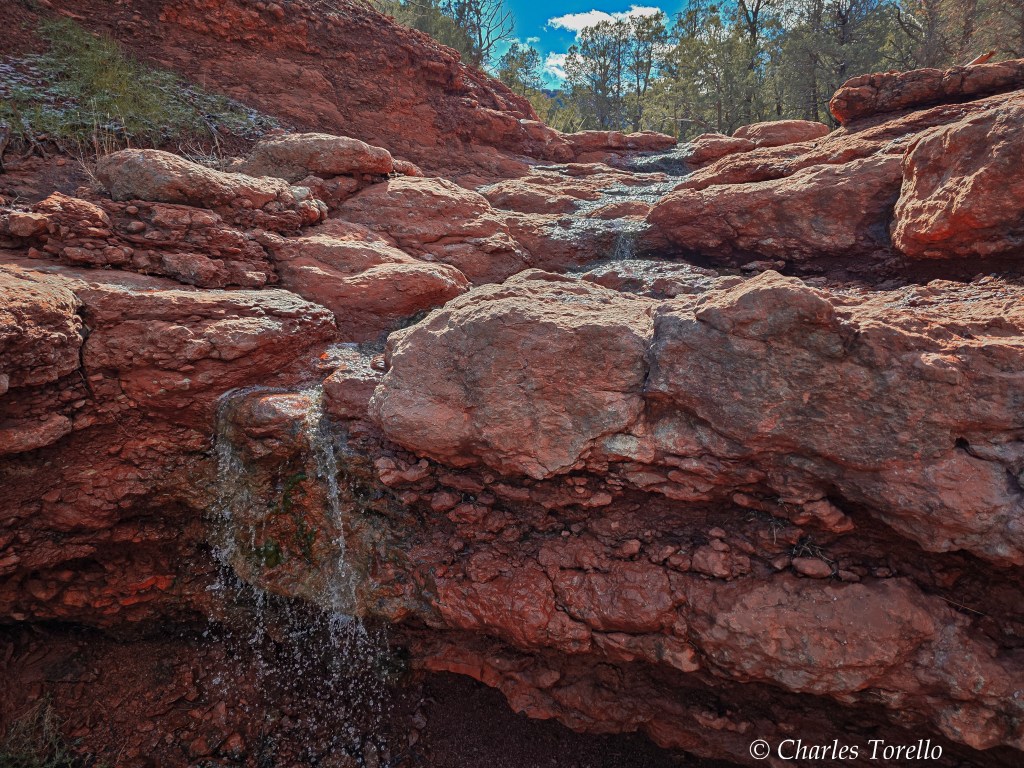
Casner’s flowing now only because of rain and snow that recently hit. On a day off I thought I’d be spontaneous and do a creek walk, and take photos, as you see below.
Now, I could perhaps do a deep dive on records somewhere – like at the Sedona Heritage Museum – to get more information about Casner’s former flow, and perhaps other now-dry creeks in Sedona.
Would I want to out forth the effort? Not really. But maybe.
Anyways, if you want to read about the disappearing rivers of the Texas Hill Country, read How do you say goodbye to a river?
If not, thanks for reading. Look at my pretty pictures now.
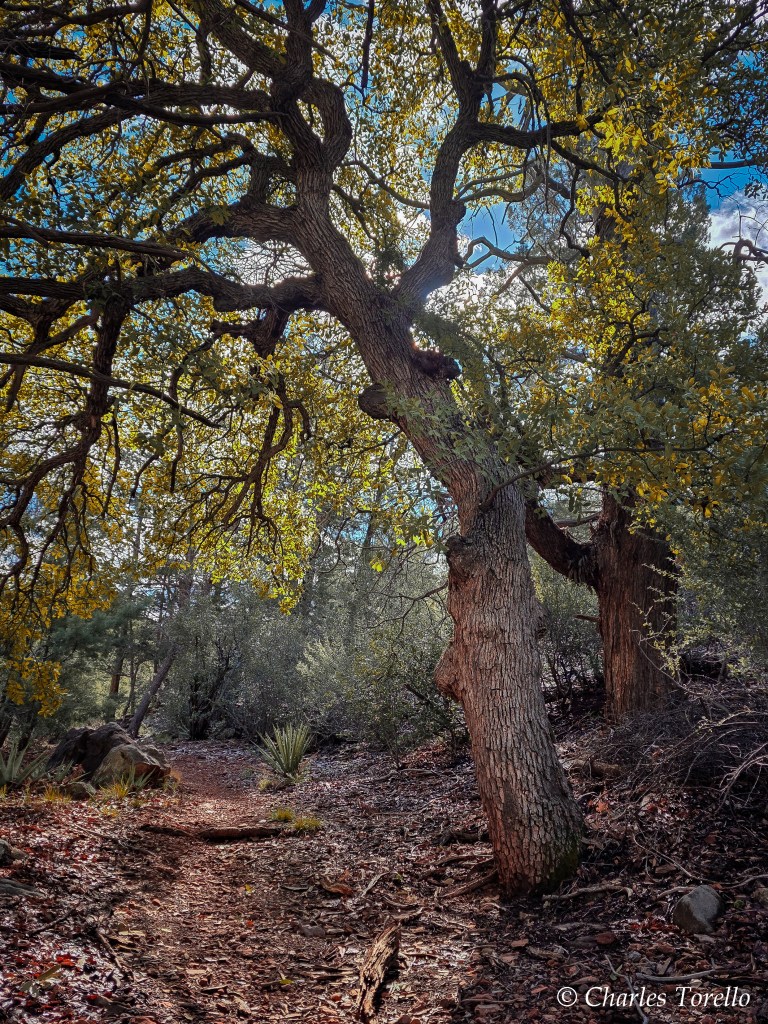
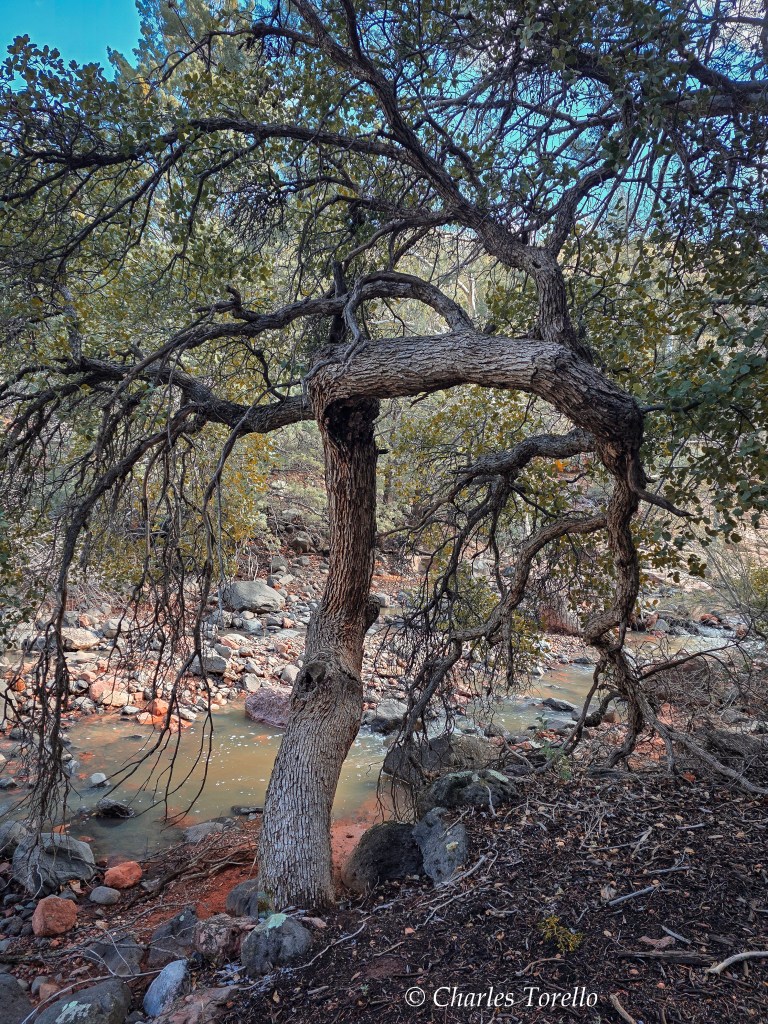
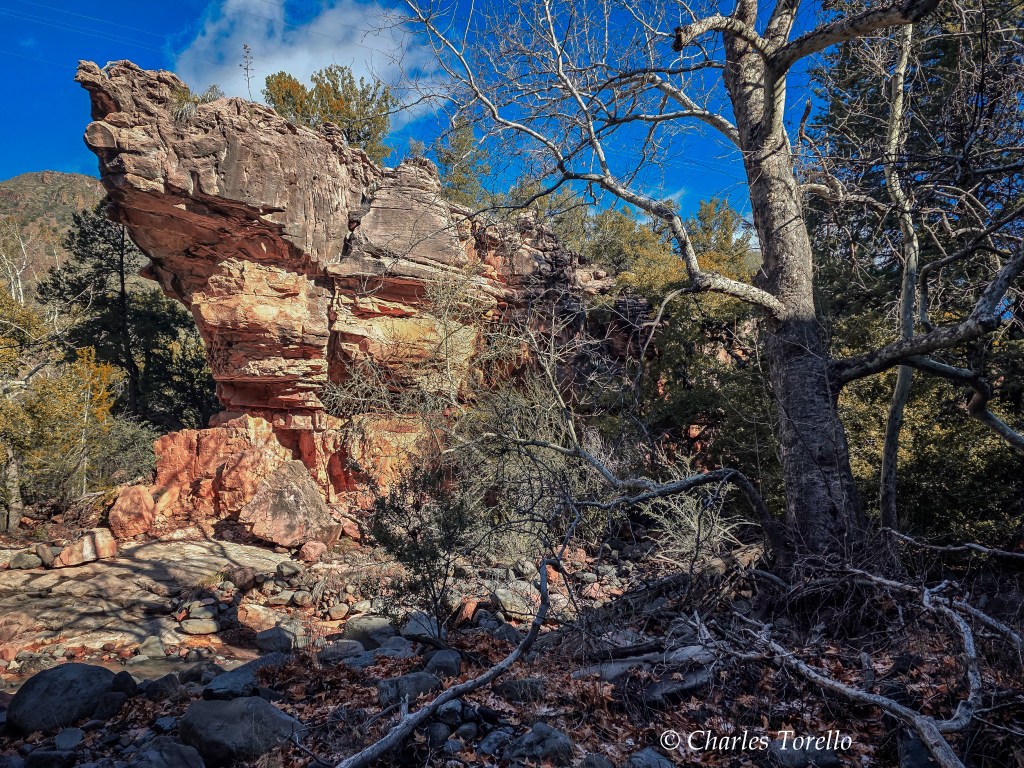
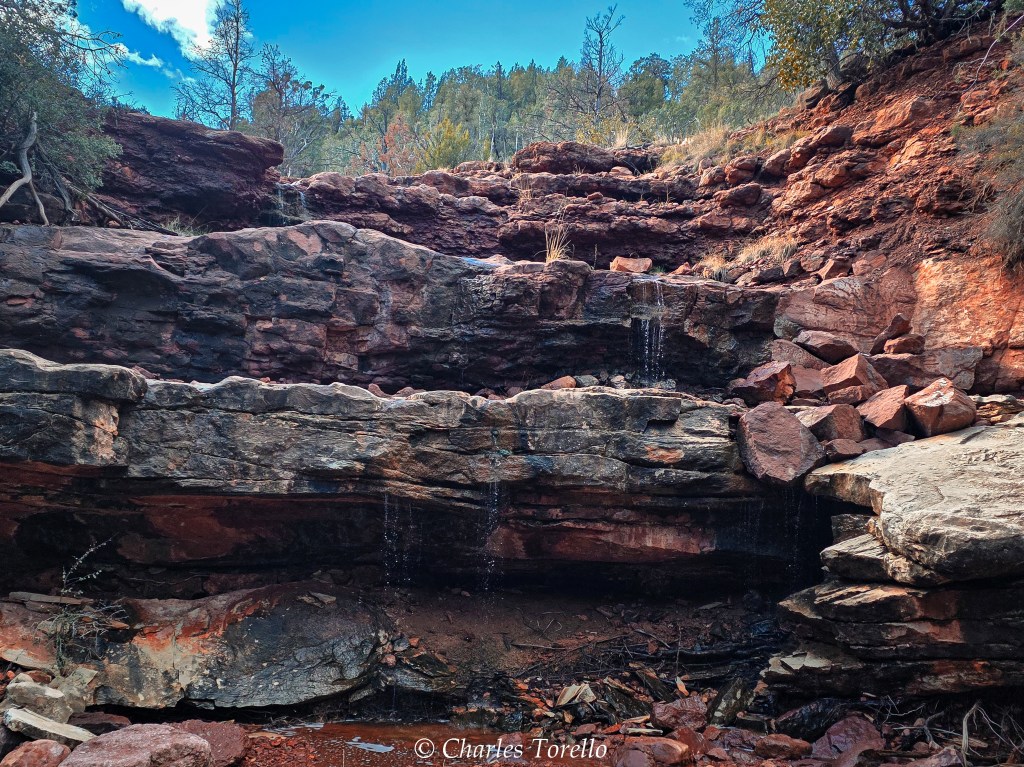
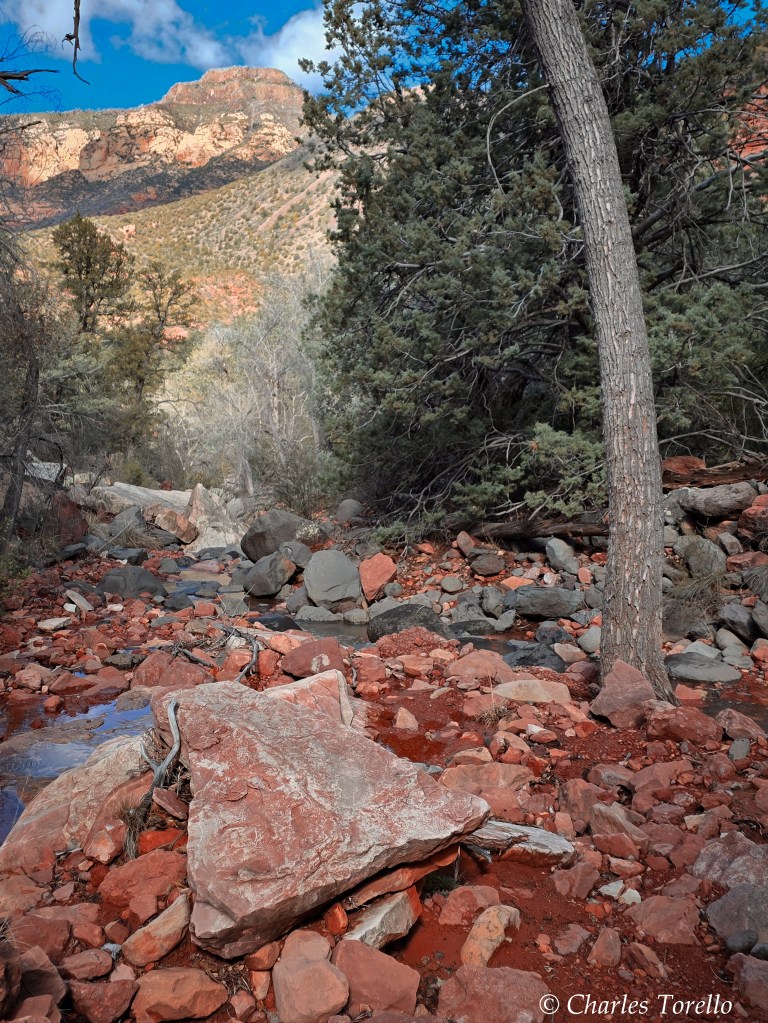
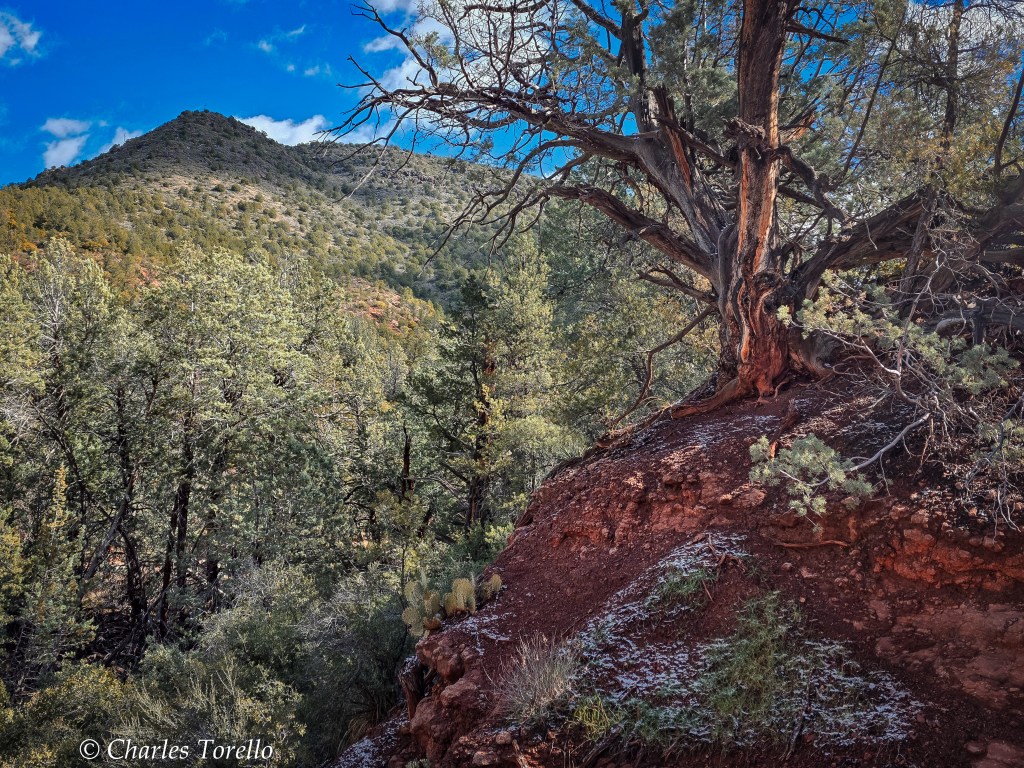
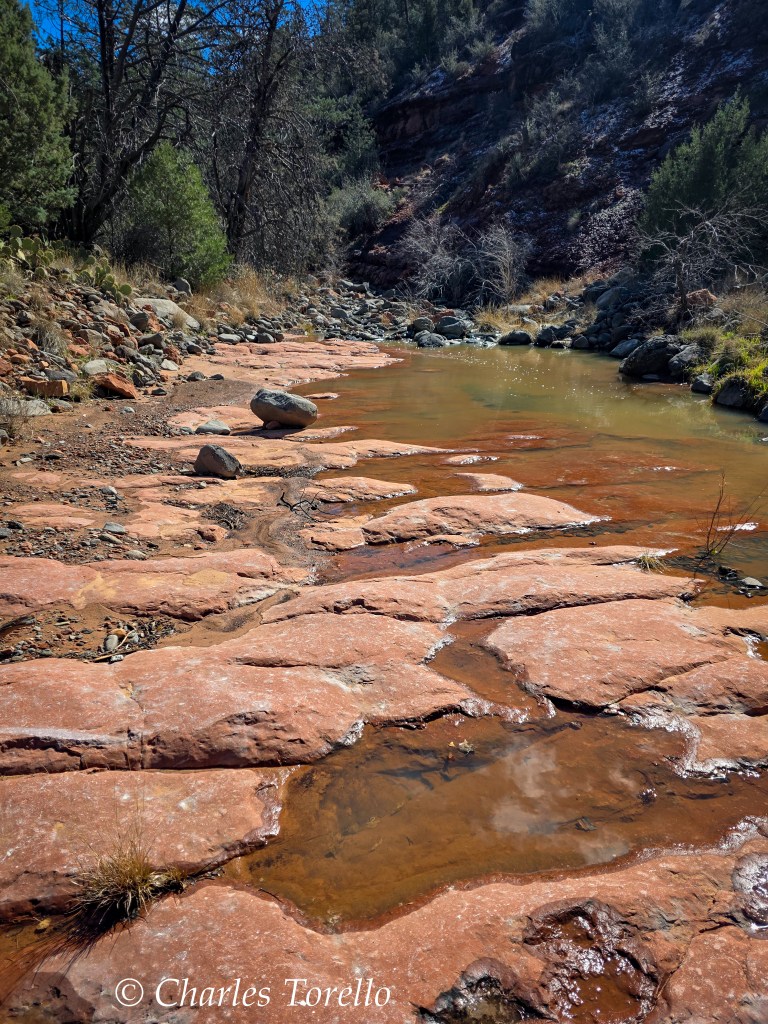
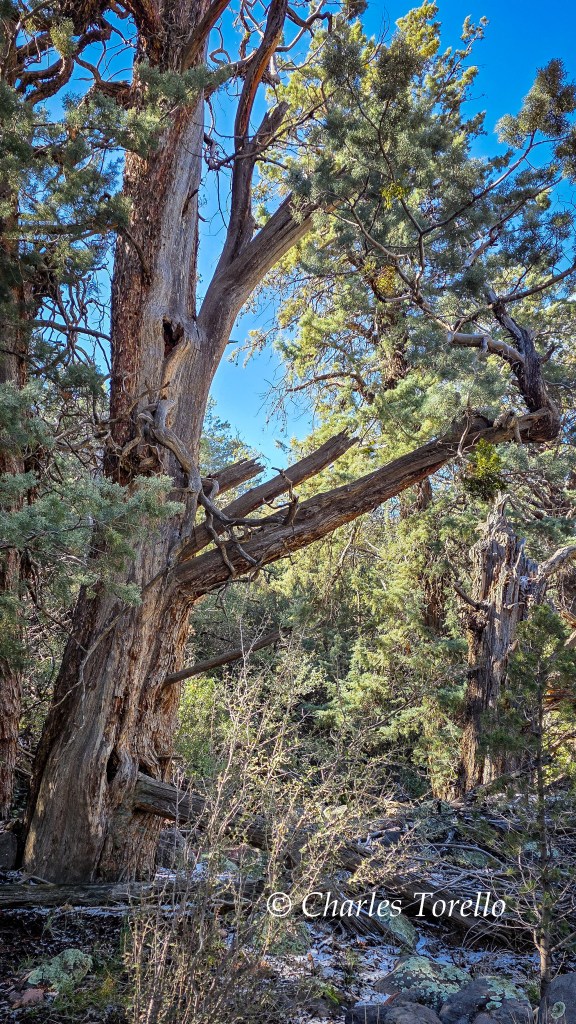
 Charles Torello
Charles,
Once again, your pictures are amazing. I can’t imagine anyone taking any that are any better. Do you do them with a camera or your phone? I also learned what an aquifer is. I never knew before.
Take Care ,
Gary
LikeLike
Thanks, Gary. Truly. These are from my Samsung phone, and processed in Adobe Lightroom.
The digital nature of my phone, by processes I don’t understand, allows me to take decent photos when light conditions are so ideal.
When they are ideal, however, I use my Nikon, because it captures EVERYTHING (including unideal light).
LikeLike