(ONE, PHOTOS ARE AT THE BOTTOM. TWO, THIS WAS ORIGINALLY A SUBSTACK POST, BUT HAS BEEN EDITED.)
I imagine 99% of Americans wouldn’t drive hours out of their way to see naturally planted ponderosa pines in Western Nebraska.
(By “naturally planted” I mean God planted them, as opposed to the big swath in the middle of Nebraska, near Halsey, which a man named Charles Besseyt planted over 120 years ago, and has proliferated nicely (and would also be cool to see)).
And it is completely understandable why people wouldn’t drive out of their way. Time is precious. When we escape from the demands of our lives, we want to escape into something more fun or beautiful or amazing. Nebraska ponderosa pines aren’t arguably any of those things.
So, truly, I don’t blame anyone for feeling like that.
But I don’t feel like that.
Where the pines begin the Great Plains begin to end. Here you’re transitioning to the plateaus and mountains of Wyoming, where temperatures, rainfall, snowfall, river basins, flora, and fauna change. Geography changes.
I’m no Mountain Man, but I know those Men took note of natural features. They followed rivers to mountains and the passes through them. They noted where ponderosas begin, and other natural phenomena, for the sake of orientating themselves in the vast wilderness.
In this 21st century of our Lord, while driving in a comfortable pickup on a paved road, phenomena like ponderosas rising from the Great Planes are more mere curiosities. They’re for Clark Griswald types who still get excited about American Road Trips. They’re not necessary for life and death.
For the Mountain Men, however, reading the land’s phenomena correctly was, in fact, for life and death. To be a thousand miles from civilization in a hostile wilderness is unfathomable to most of us nowadays. Yet those Men went, and many died, even horrifically.
But they went west to trap beaver because they believed it would be fun, adventurous, or lucrative. They went because they heeded the wild spirit of mankind that sought to know itself better through the awesome wilderness of North America 200 years ago. Though some died, some thrived. Some became legends. In the process, the Mountain Man discovered the paths West.
The discovery of these paths, from the Missouri River Country to the Pacific Ocean, is the greatest legacy of the Mountain Man in American history. Their paths became the trails along which pioneers trod to find their Promised Lands. (And, in time, many of those paths also became railroads, highways and even interstates.)
The most famous trail the Mountain Men discovered was the Oregon Trail – and I’m not reciting its full history here. However, let’s just say those Men brought word back east of how to get to the fertile country along the Willamette River in the unsettled Oregon Territory, which was outside the jurisdiction of Spanish and later Mexican California.
The opportunity to live free on good land up for the taking was the dream of countless generations preceding this new breed of man called the American Pioneer. The temptation to find your own piece of heaven out West was strong to a point of overpowering fears of dangers to be experienced along the way. So westward pioneers went.
Though pioneers only trickled at first, by the 1850’s that trickle became a flood, especially as spur trails to Utah and California from Wyoming were blazed. (And the flood increased more by the 1860’s as gold was discovered in Colorado and Montana.)
But all Trailblazers passed through Scott’s Bluff in Nebraska, which is where I found myself on Monday the 29th of July 2024.
I’d been visiting family in Northeast Colorado. The temptation to see Chimney Rock and Scott’s Bluff – two significant landmarks on the Oregon Trail – less than two hours to the north was sufficient enticement to not yet return to Texas.
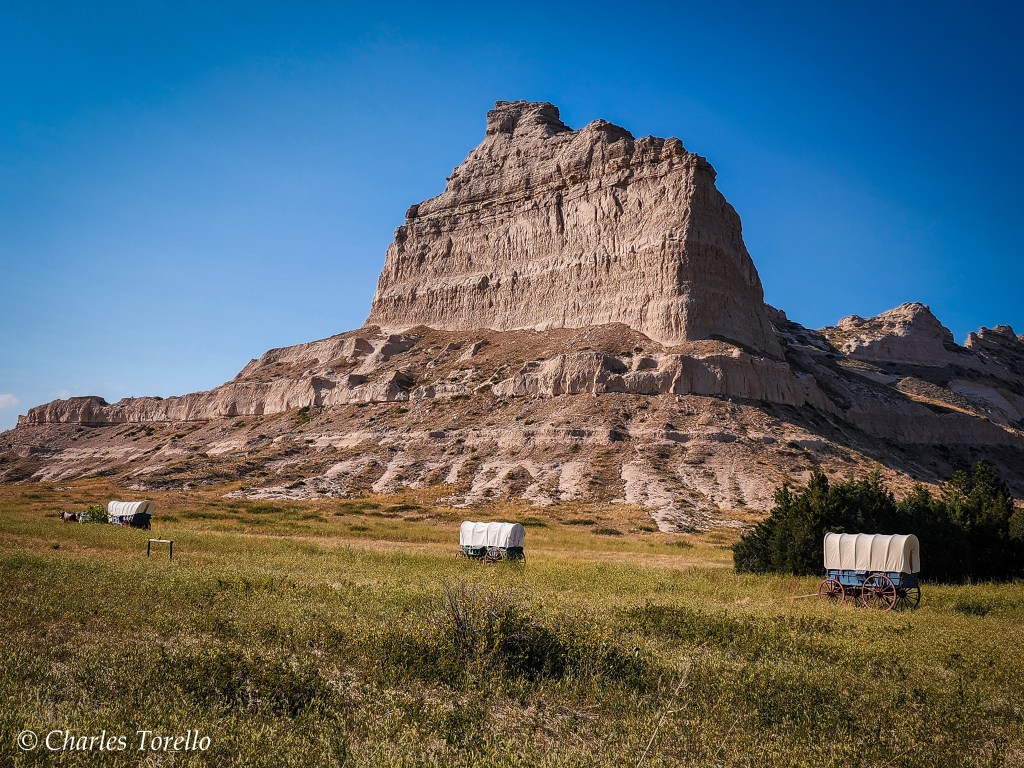
My first destination was Chimney Rock. It’s a spire-topped sandstone formation rising abruptly out of the Western Nebraska planes. Put Chimney Rock in Wyoming, and it’s like many nameless other formations. However, because of its novelty in the Great Planes of Nebraska, it became the most written-about landmark in pioneer journals.
As for me, Chimney Rock was “ok”. I’ve seen lots of similar stuff. But you go there to appreciate its historical significance, which I did.
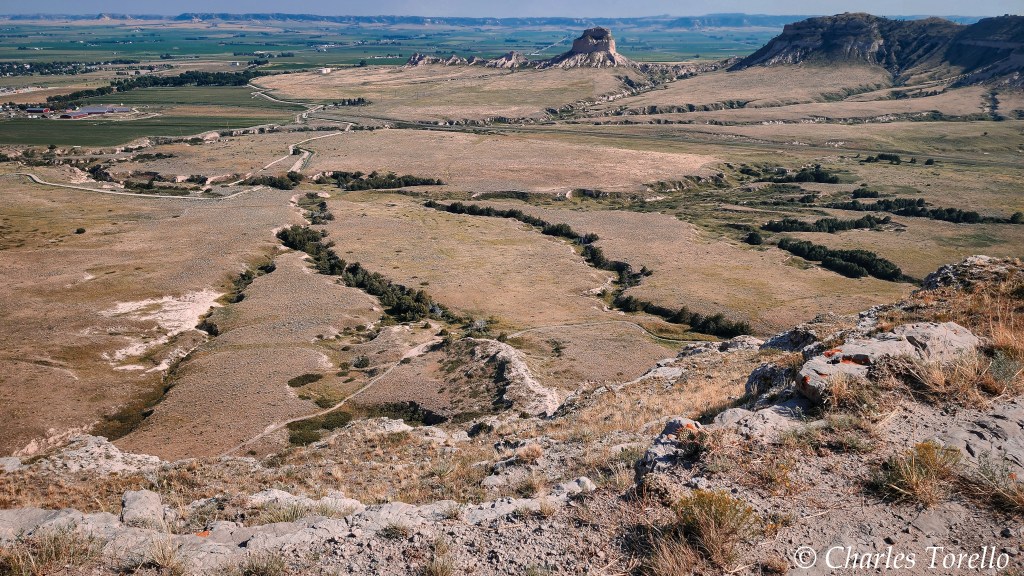
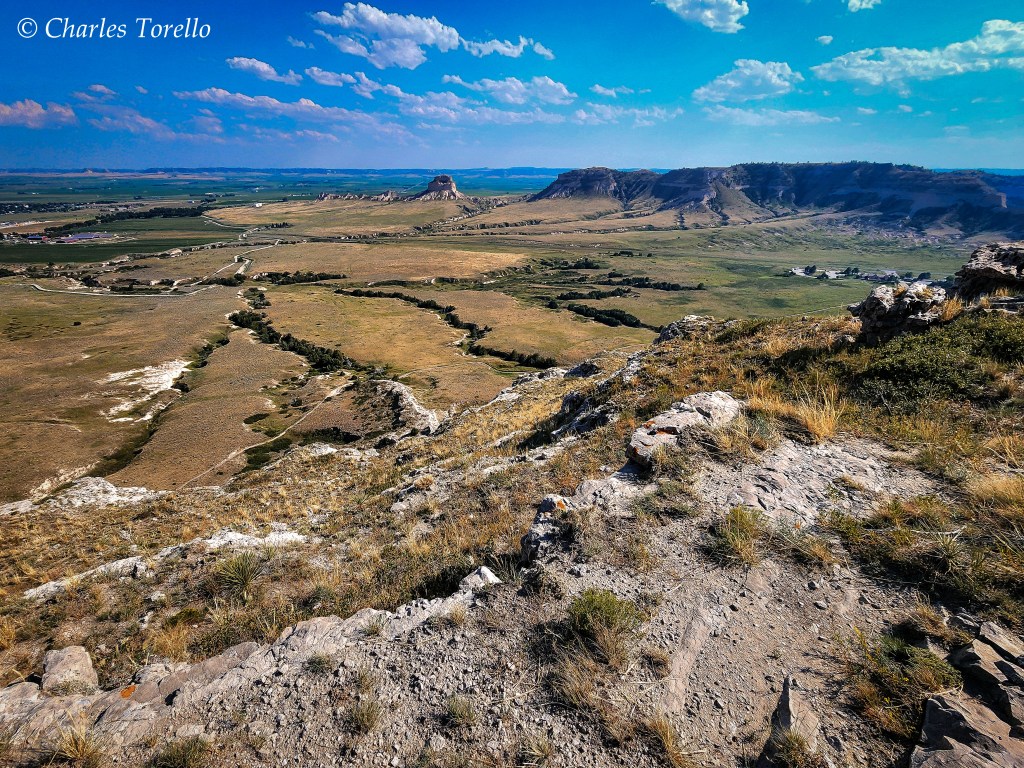
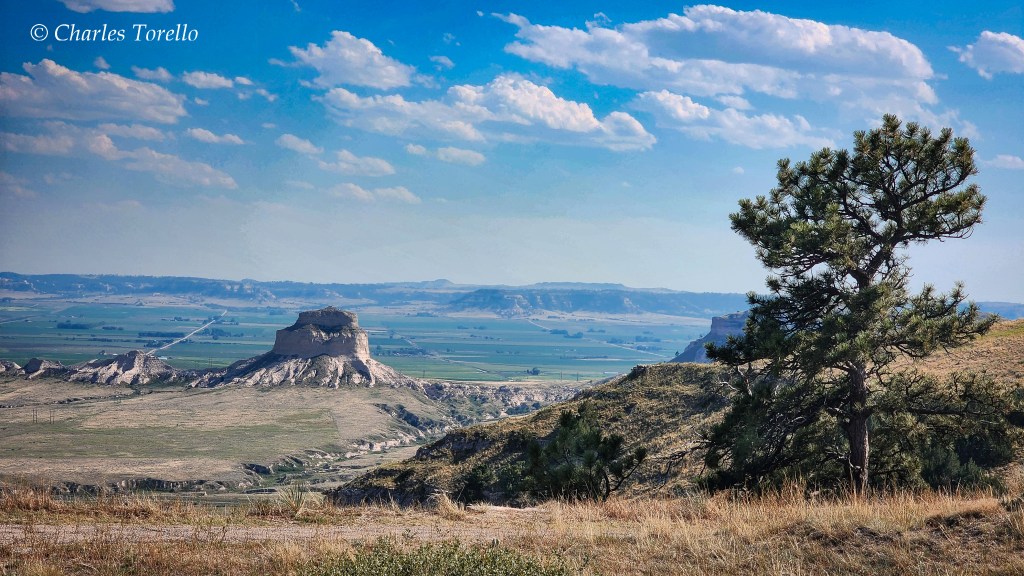
Frankly, I found other sandstone bluffs rising out of the Planes in the far horizons more curious. In the furthest horizons, where the bluffs mark the rim of the North Platte Valley (a Missouri River tributary), they glowed tan and brown like a desert under the hot sun. They illuminated why the first explorers of the Louisiana Purchase called the far western Great Plains the “Great American Desert”.
However, the bottomland along the North Platte is green. It’s not desert now. That’s from – at least as I imagine the situation without studying water management practices of Western Nebraska – pumping the Ogallala Aquifer and redirecting water through man-made irrigation channels. Regardless of what exactly did make the North Platte River bottomland green here, I do say it is a tribute to the endurance of the pioneer to make life here a reality – to make dreams a reality.
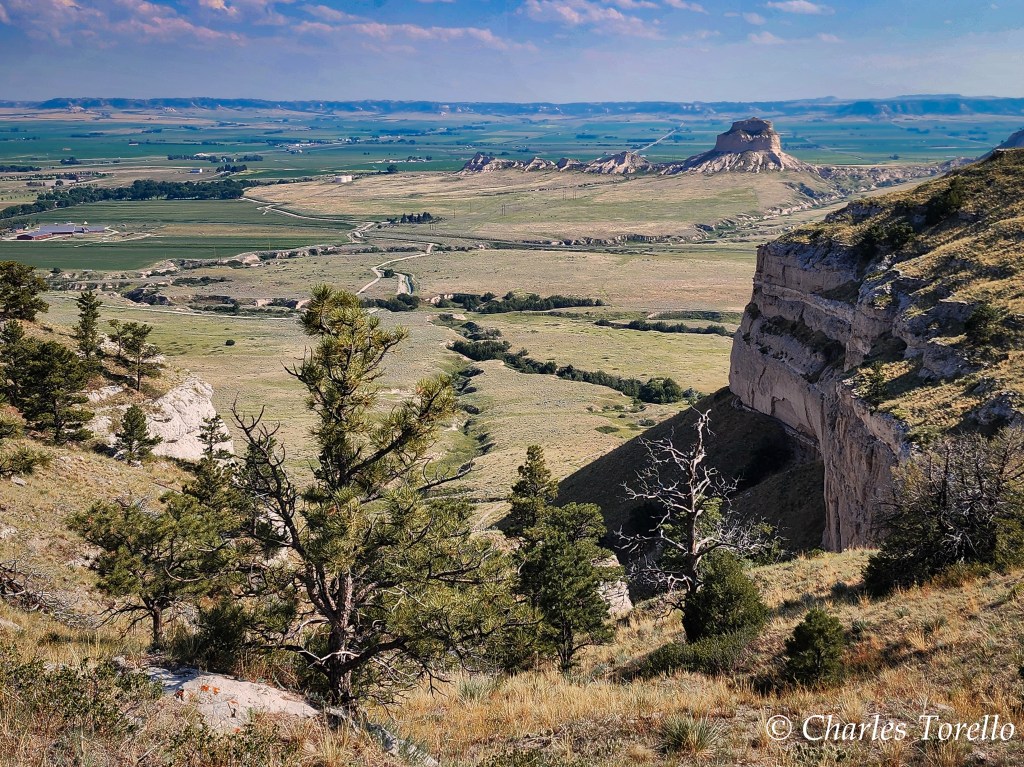
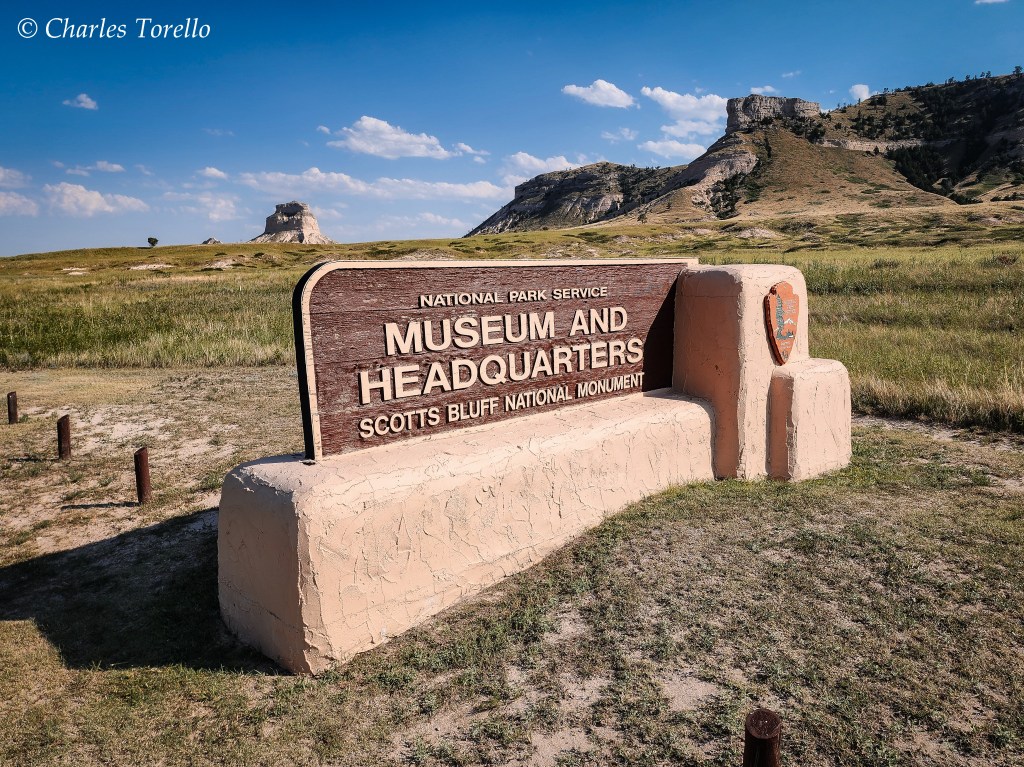
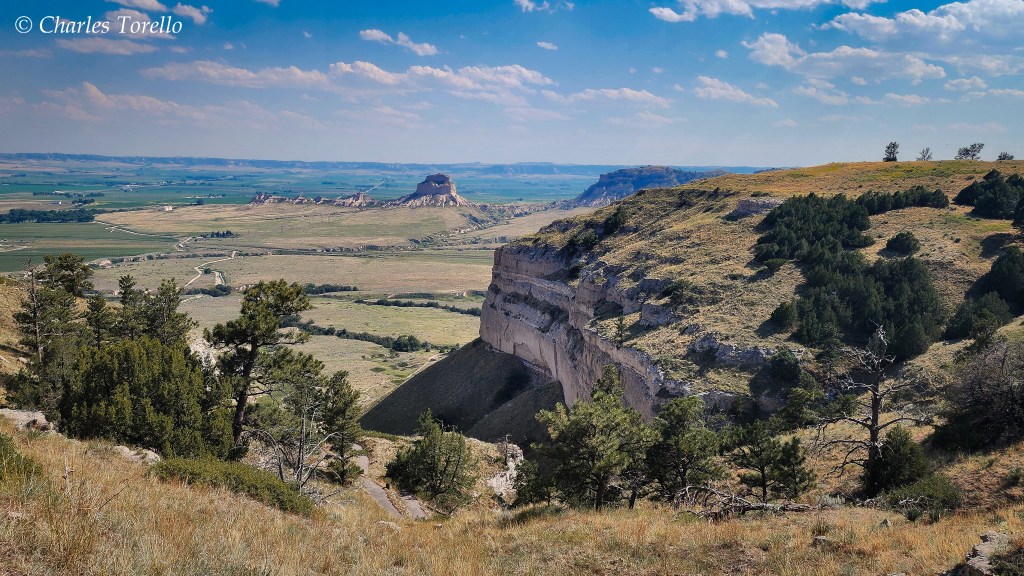
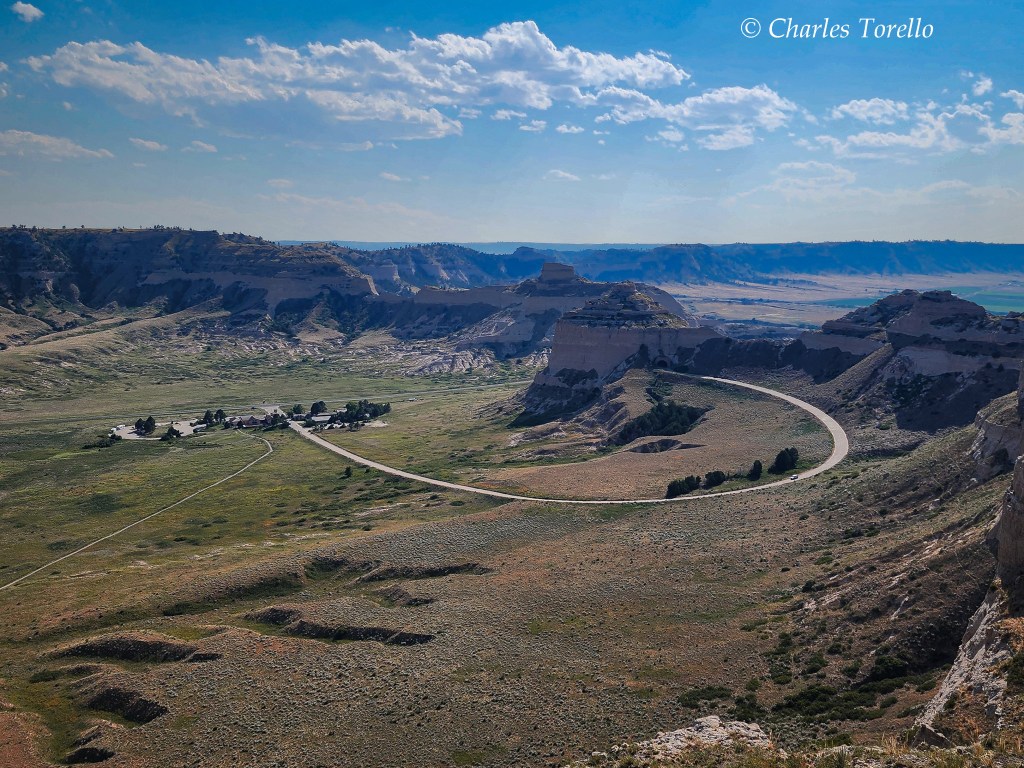
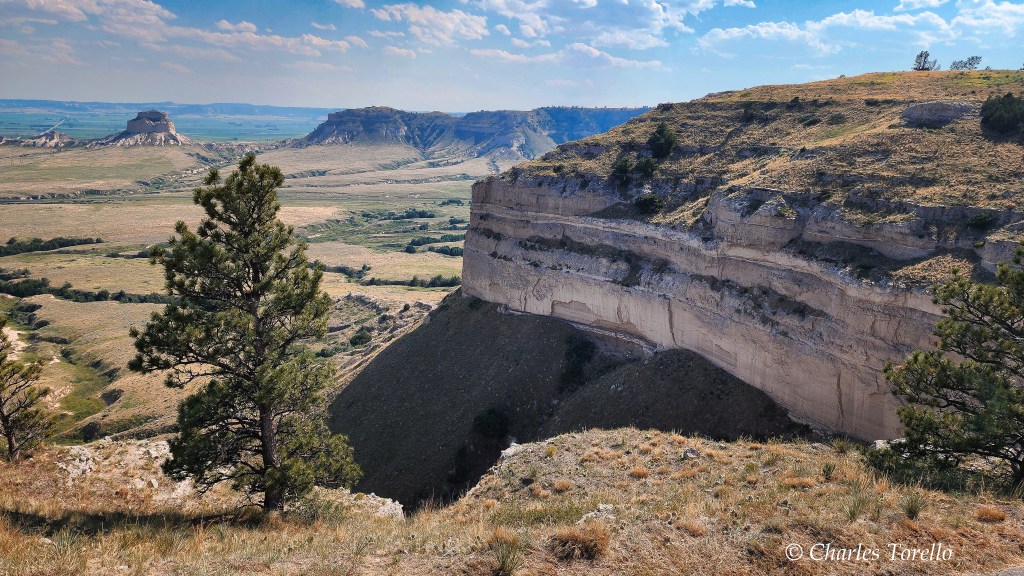
And this last thought really hit me while standing atop the actual Scott’s Bluff, about 20 miles west of Chimney Rock. Here is a National Monument with a road to the top of the bluff which affords cool breezes and vast views of the town of Scott’s Bluff 800 feet below. The town looked clean and green and the result of determined farmers whose ancestors in Europe probably had better rain and soil but less freedom. That freedom motivated them to tame this “Desert”, which looked more apparent with a higher view of the far, brown horizons.
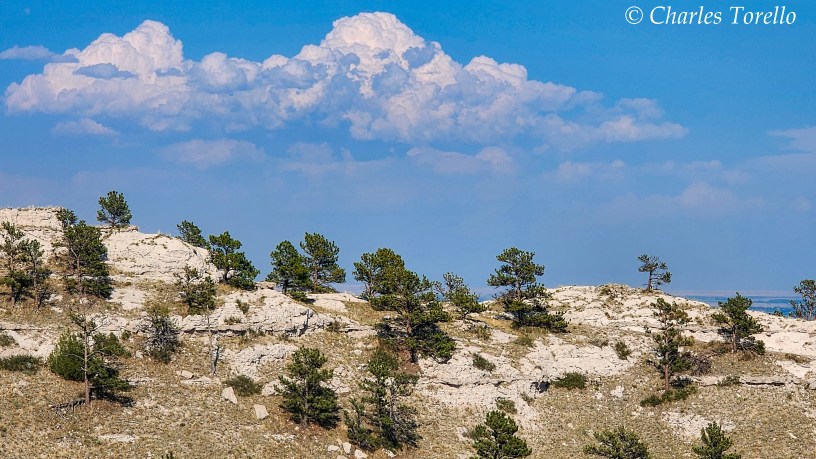
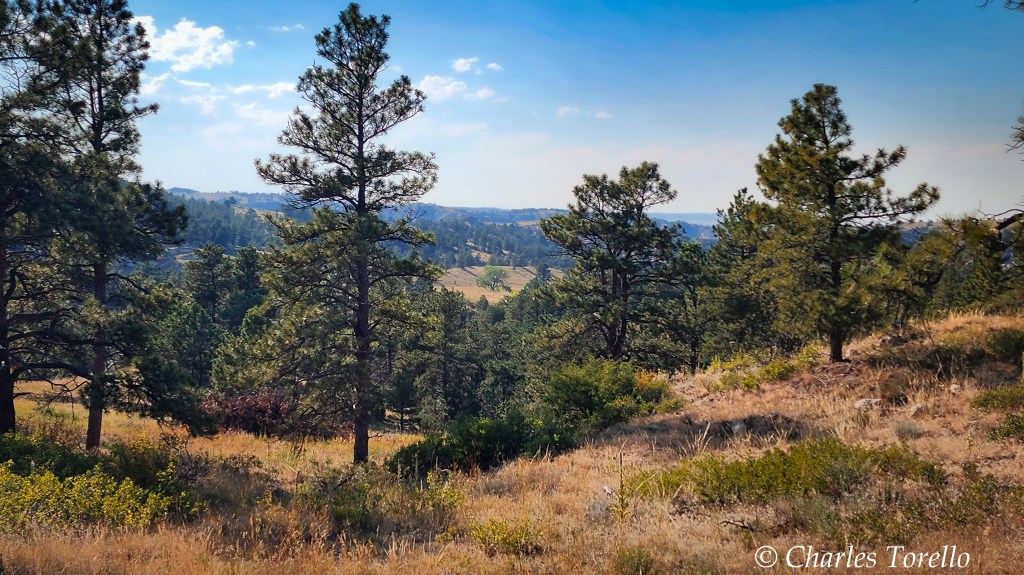
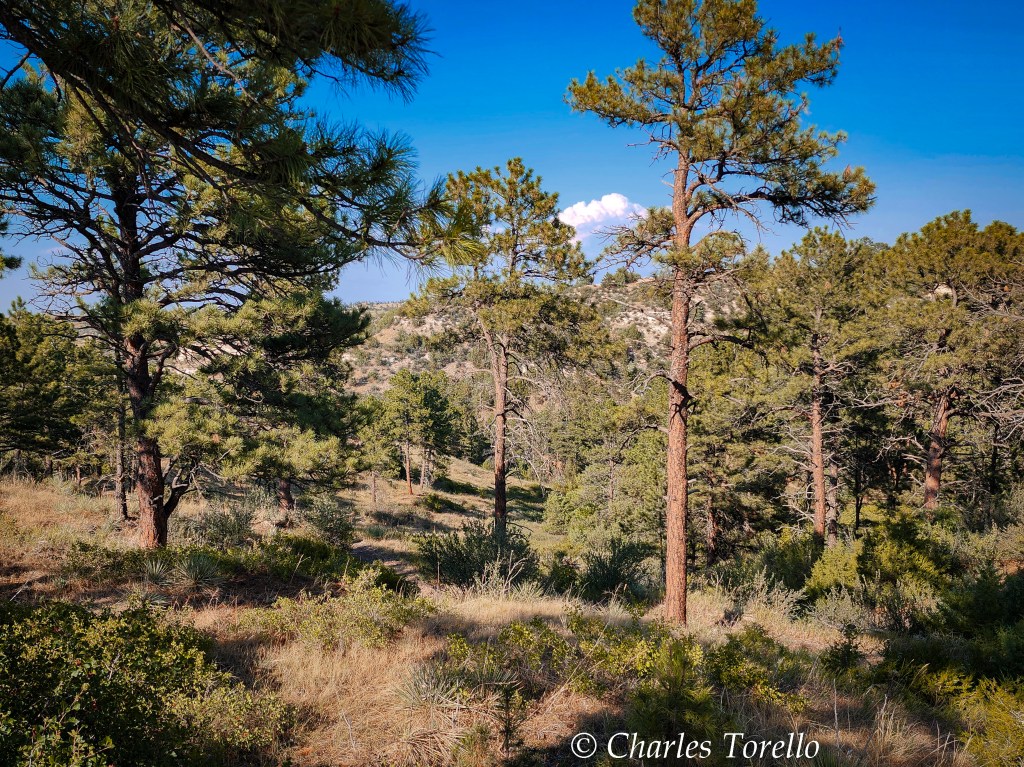
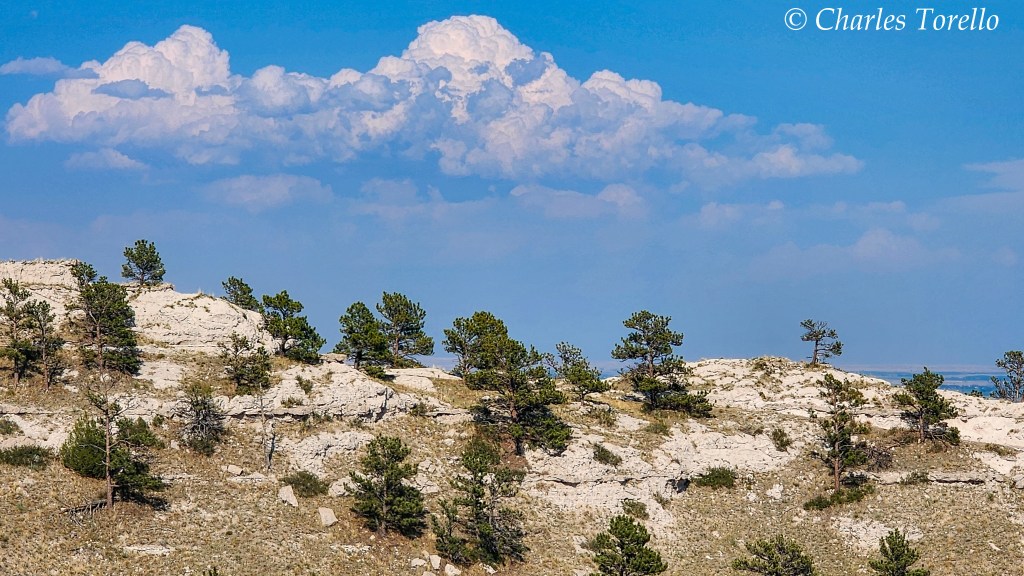
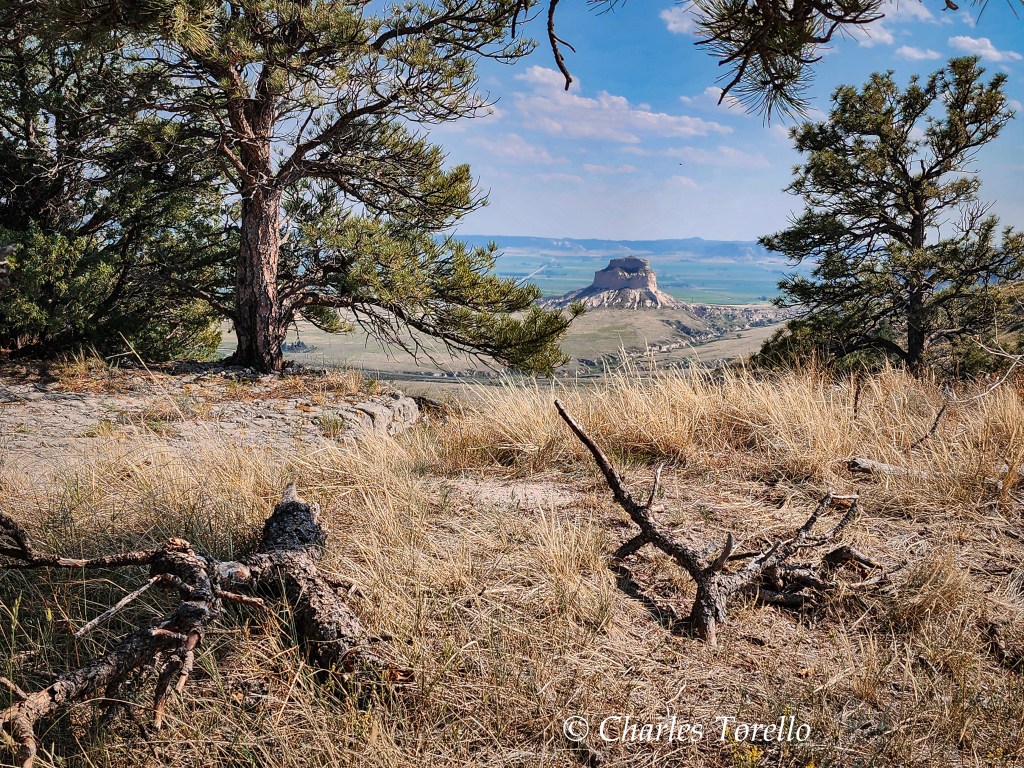
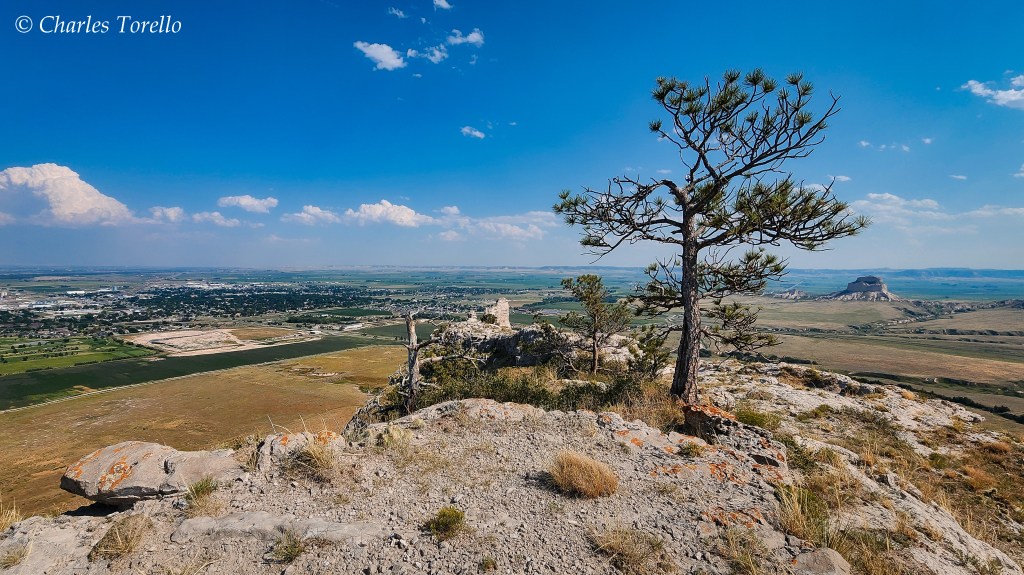
And there were ponderosas atop this bluff. This was unexpected. Their presence genuinely made me happy. I thought I’d have to drive further to see the trees.
The 800’ rise in land – from the bottom of the bluff to the top – obviously generates that much more orographic lift of moisture to grow ponderosas at the top of the bluff but not its base. This fascinated me. Perhaps there is some other weather dynamic in play, but probably not.
But such questions were secondary to photography this day. The ponderosas compelled me to spend about an hour taking photos before park police kicked everyone out. However, I saw enough of them to make my day.
Praise God.
Ironically, the ponderosa presence was a warning to pioneers. They communicated the mountains of Wyoming weren’t far away, and the Oregon Trail got much harder and deadlier in the mountains.
Yet, like the Mountain Men before them, the Pioneers also braved dangers, not for beaver skins, but for a new civilization. And, by gosh, they did it.
And the spirit of the American man to make a great civilization out of a vast wilderness still blows my mind. A small town like Scott’s Bluff, Nebraska I think testifies to American greatness as much as New York City.
I’ll stop now. But, perhaps you’ll believe me when I say I was quite, quite happy to have driven 2 hours out of my way to see Western Nebraska…
And its pines.
 Charles Torello
Great pictures. Interesting commentary
LikeLiked by 1 person
This may be my favorite type of writing. That’s why edited and republished. Thanks for reading.
LikeLike