I’m not writing these posts on my trip this past summer because I believe they’ll become best sellers. Not at all. I’m writing them because they’re a topic unto which I can practice writing. It’s far better to write them than to write nothing. Not to practice is not to improve, and there is always a need for me to improve considering how small my readership is.
However, I forgive myself. For now, it’s the best I can do. You’ve got to discipline yourself somehow. You gotta be consistent somehow, and I’m cool with that.
However, this isn’t to say I don’t enjoy writing these narratives. They are fun to write. They cause me to burn details of my days brighter into my memory. They allow me the chance to practice weaving historical and geographical information into small bites that are intended to evoke curiosity.
And now I enter Kentucky. Actually, quite little was known to me about the Bluegrass State before I got there. To produce the previous post “Kentucky was the first” required internet searching. Daniel Boone leading people through the Cumberland Gap which opened the way for tens of thousands of future settlers was not a fully-known concept to me.
But it is a hell of a concept to know. From 200 to 200,000 white people in 25 years! That’s an almost incredible population change. What caused this? The soil alone? The Call of the West? An easy route through the Cumberland Gap? Something else?
I can’t answer these questions because I don’t know Kentucky’s history too well. But I’d like to know more. It would be fun to learn more because I found it fun to search out the numbers of Kentucky’s early growth; and it was fun to type the previous blog, and this one; and it was fun to drive through, for the first time, state #41.
Now, I can’t say rolling hills covered with deciduous forest as far as the eye could see was a grand spectacle. It wasn’t. It looked like the other Eastern States. But I was grateful to be seeing more of America unfold from its highways because such is still a mindset of exploration wherein the imagination is open to titillation for new things never seen before.
To me, it didn’t matter that Kentucky has been thoroughly known since the 1790s, or that its topography is perfectly displayed on USGS maps. It’s all new to me, and even the simplest things, unremarkable to others, can make lasting impressions.
But I’ll address that later.
One impression I most certainly got was that Kentucky is definitely the South. When I woke up at my motel in La Center on Wednesday the 10th of June in the year of our Lord 2026, and walked out into that intensely humid air to give my keys to the hotel attendant, her friendly demeanor and drawl communicated the genuine kindness of Southern hospitality. It’s nice.
When I got my oil changed at a mechanic shop everybody was as friendly as can be. I knew I’d get professional service. The mechanic and I struck up a conversation after my profession of love for Toyotas caused him to say he has one too, and he loves taking it into the San Juans of Colorado. I told him I’d just been there last week, and I agreed that they are majestic.
Thereafter, Paducah was my destination. There I’d get on Interstate 69-24 and continue east on 69 towards Mammoth Cave. However, I soon became a little bedazzled and confused.
It wasn’t something spectacular. But it was the area between the Tennessee and Cumberland Rivers near their mouths on the Ohio. Upstream between these two rivers is a place called the Land Between the Lakes, which I’m sure is a humid, swampy morass that can evoke cussing with its skeeters and poison ivy.
At the same time, I think it’s interesting how these two major Ohio tributaries don’t flow into each other but do flow into the Ohio 4 miles apart from each other. You probably have to be a map nerd to appreciate this and the fact that, in this area, where the 3 rivers meet, flows all water draining westward off the western slopes of the Appalachians.
This is wet, wet country. Like a swamp. I wondered how close cypress trees are.
This contemplation caused me to forget to continue eastward on I-69. I, instead, took I-24 south to Clarksville, Tennessee. I didn’t realize I was off course until I saw the sign that says “Welcome to Tennessee”. I was like 100 miles off course.
But it can be a good thing to find yourself in a state of mind wherein you’re oblivious to the world around you. It’s a sign of the imagination firing. Its cause is a state of wonderment.
No big deal. I redirected towards Bowling Green, and was at Mammoth Cave National Park at 1:00 instead of 12:00.
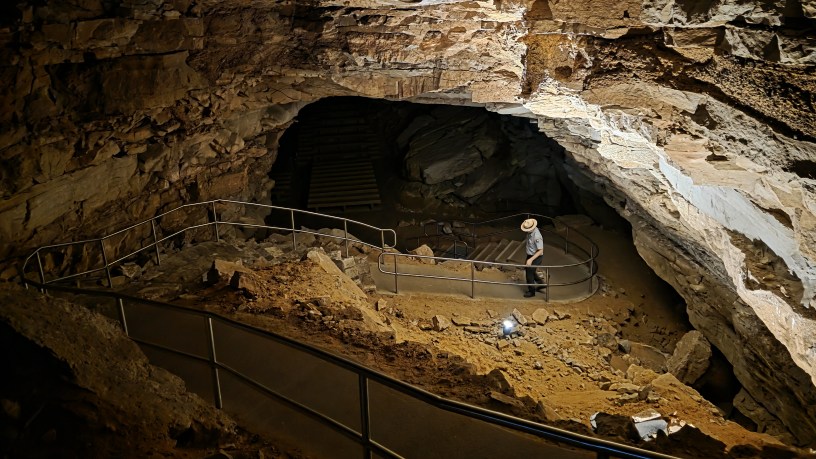
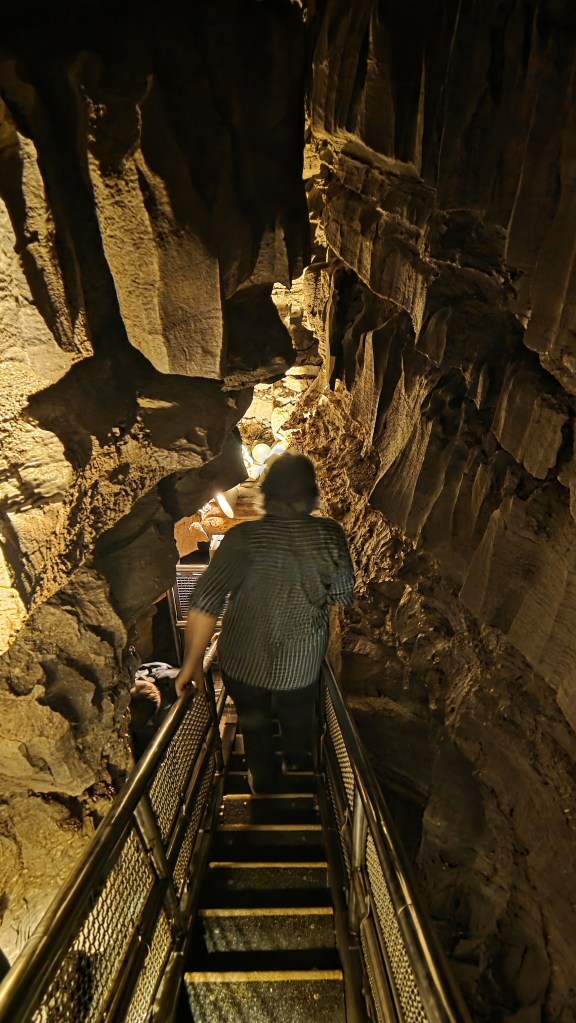
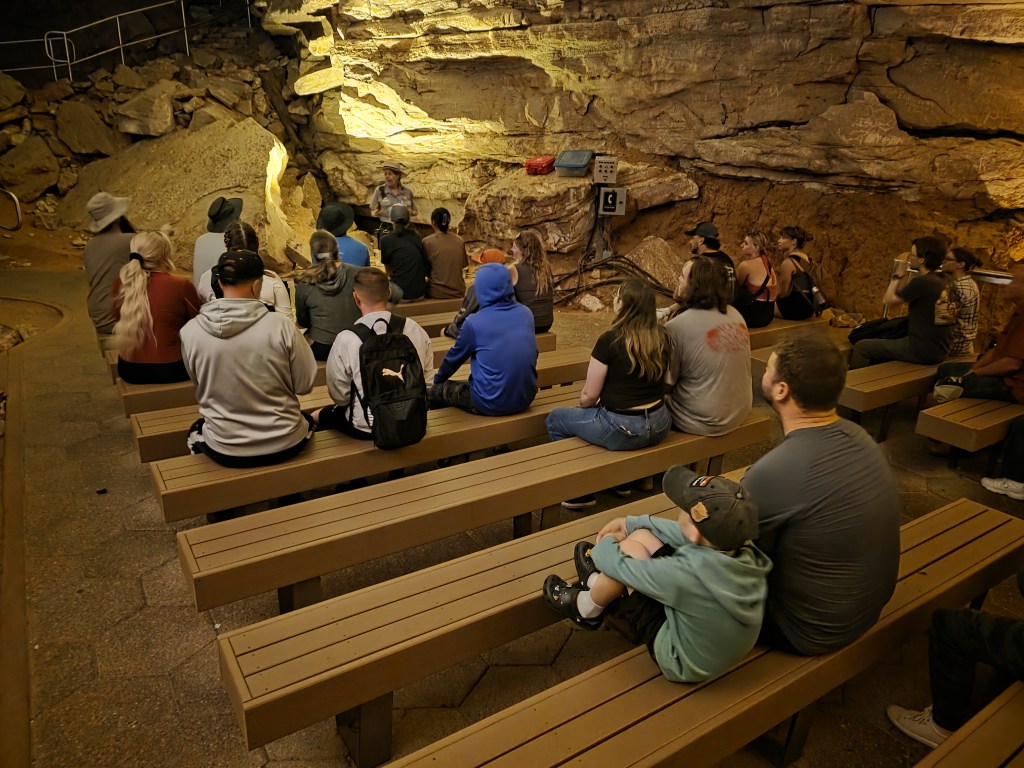
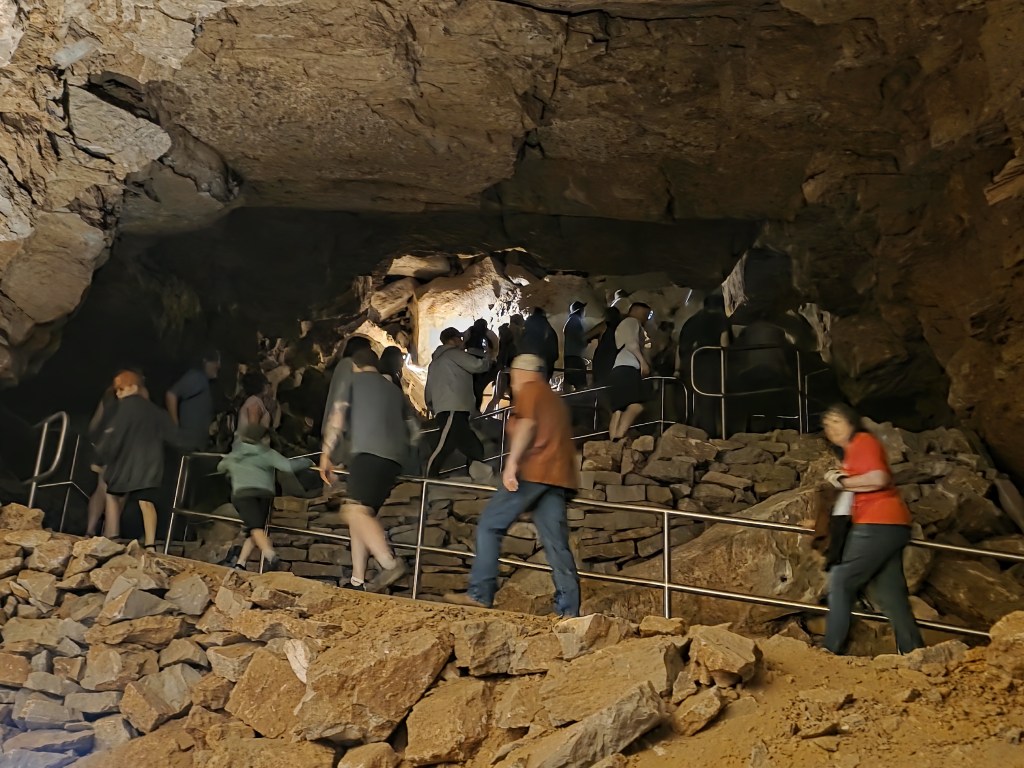
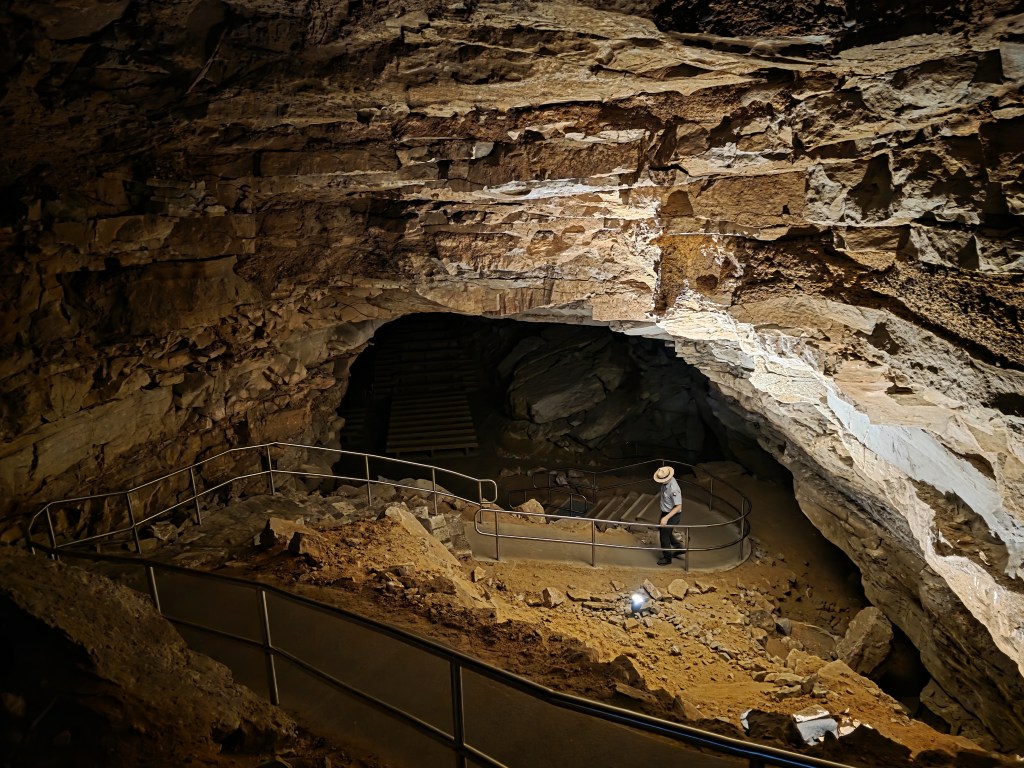
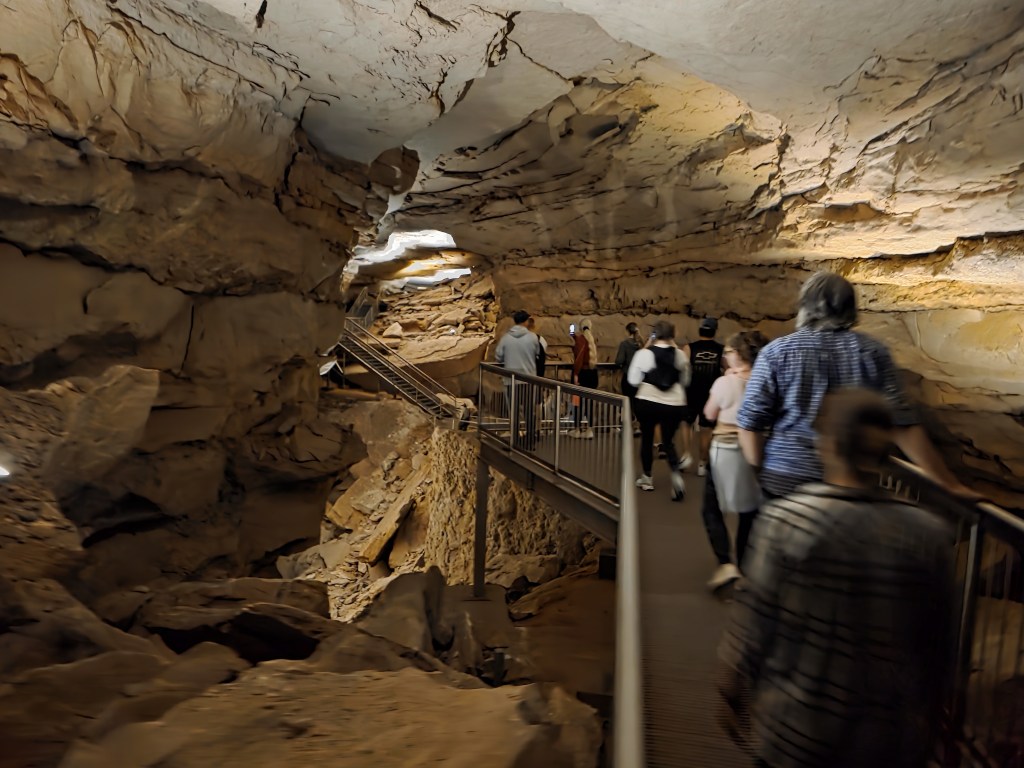
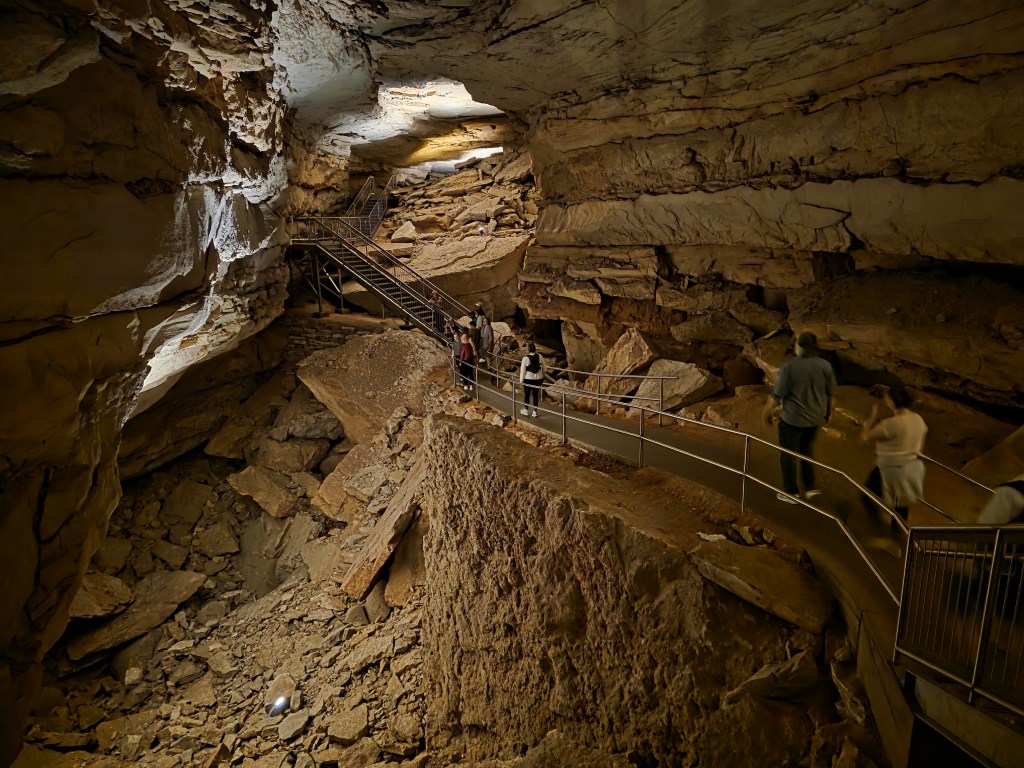
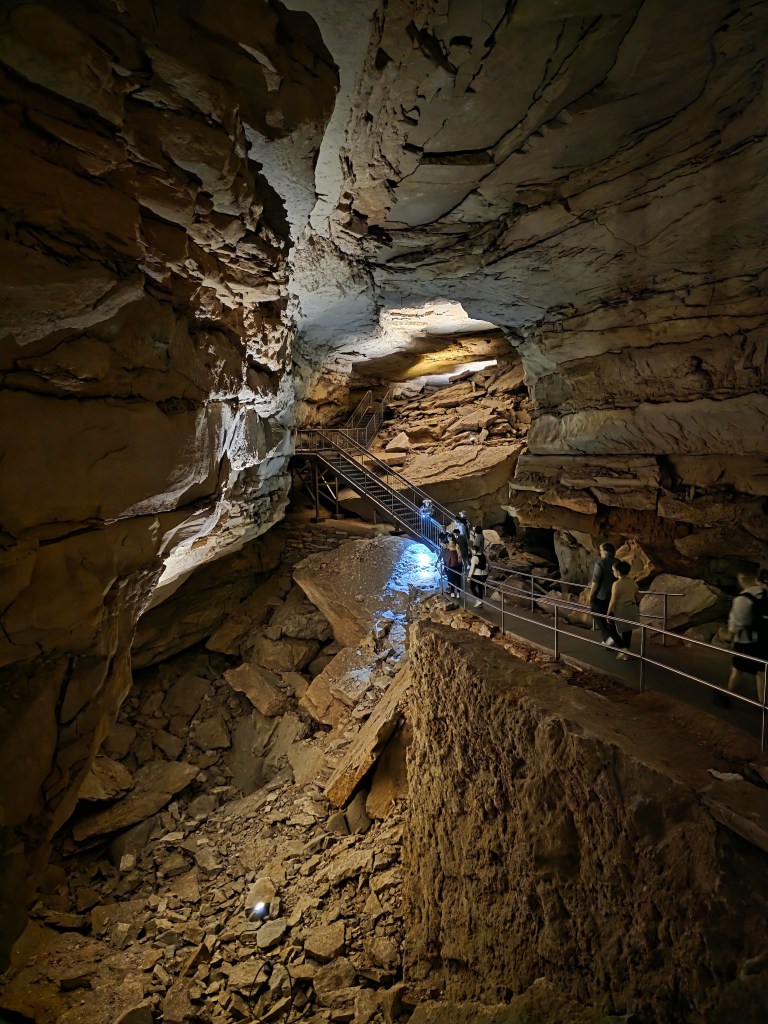
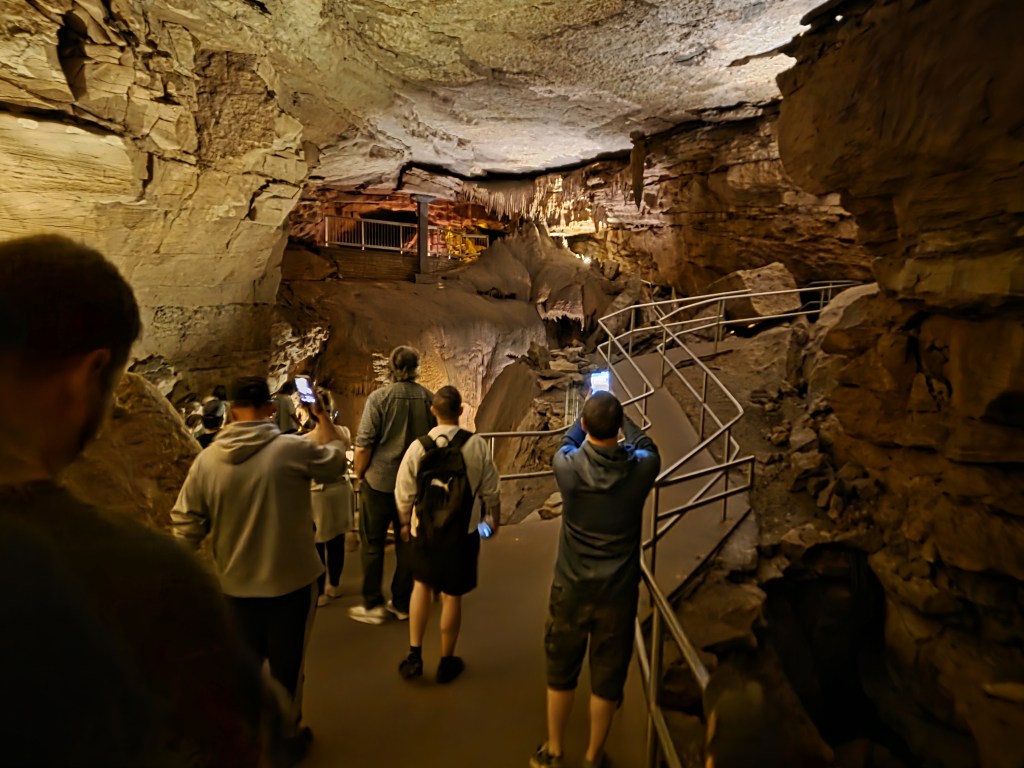
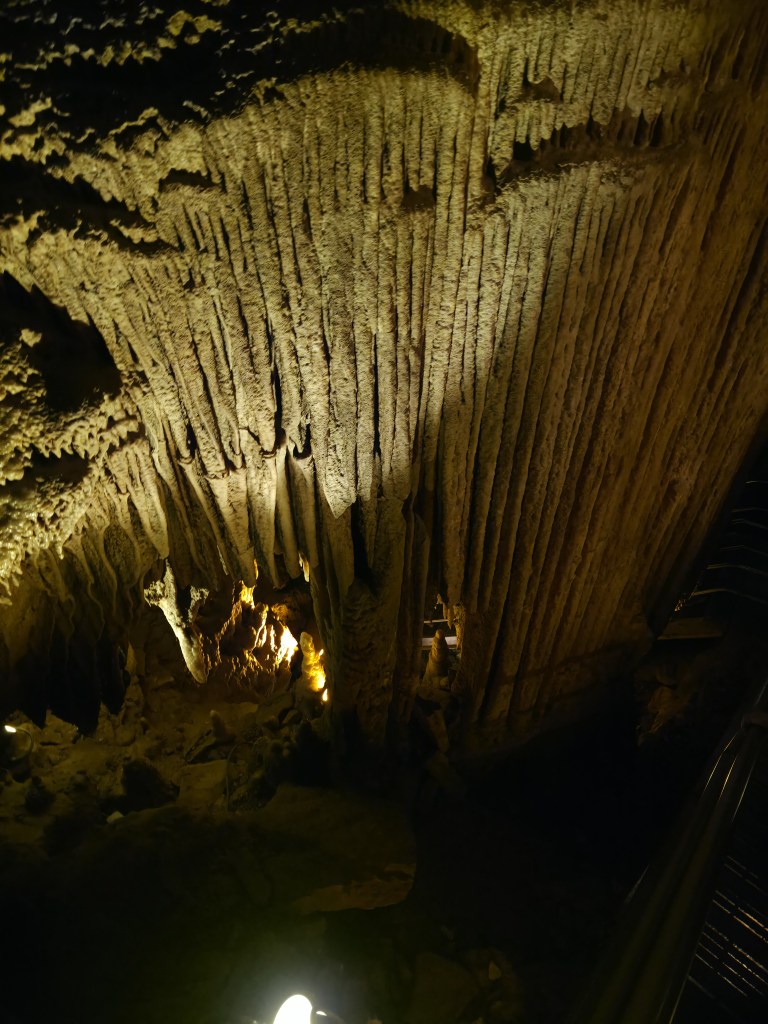
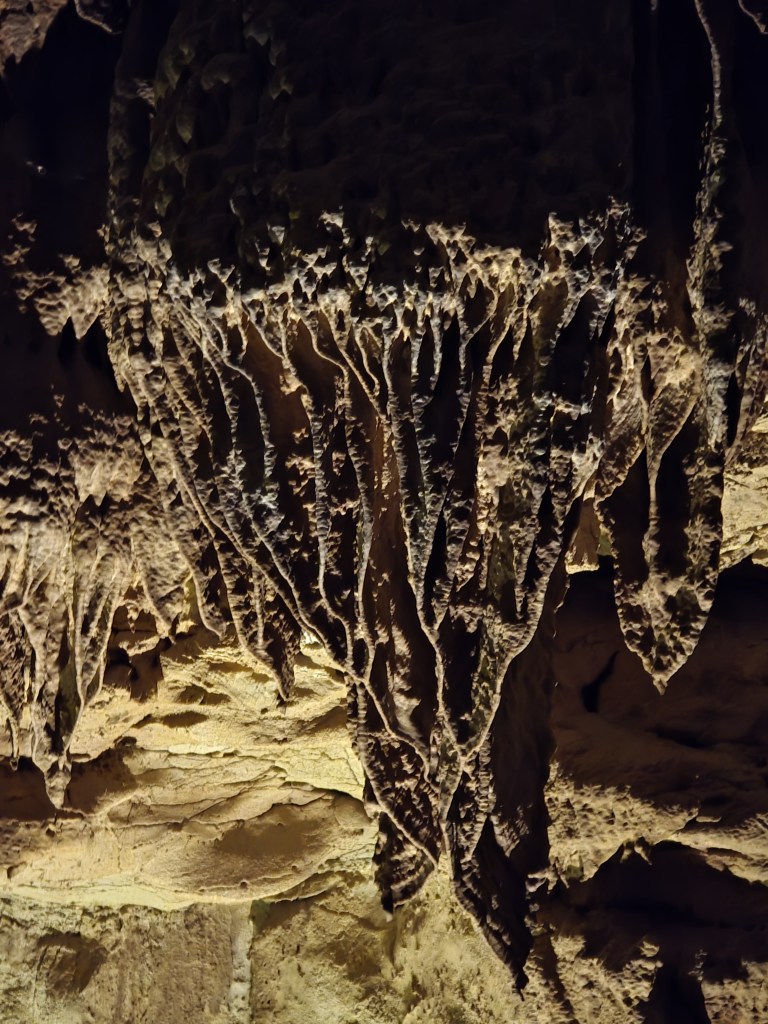
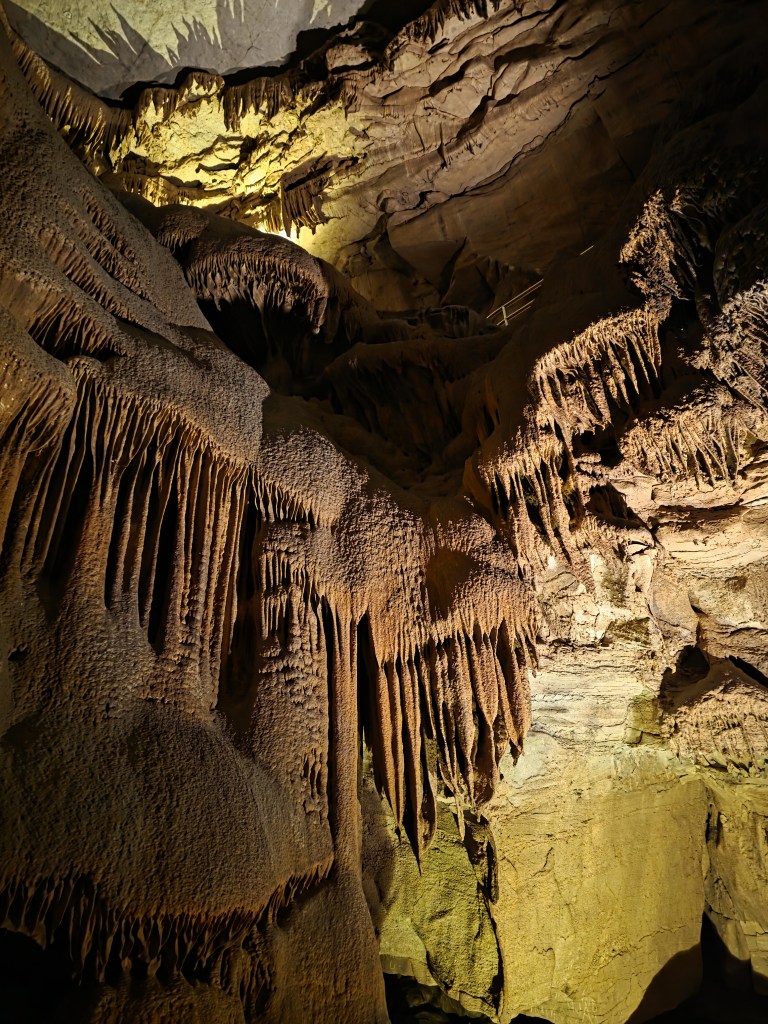
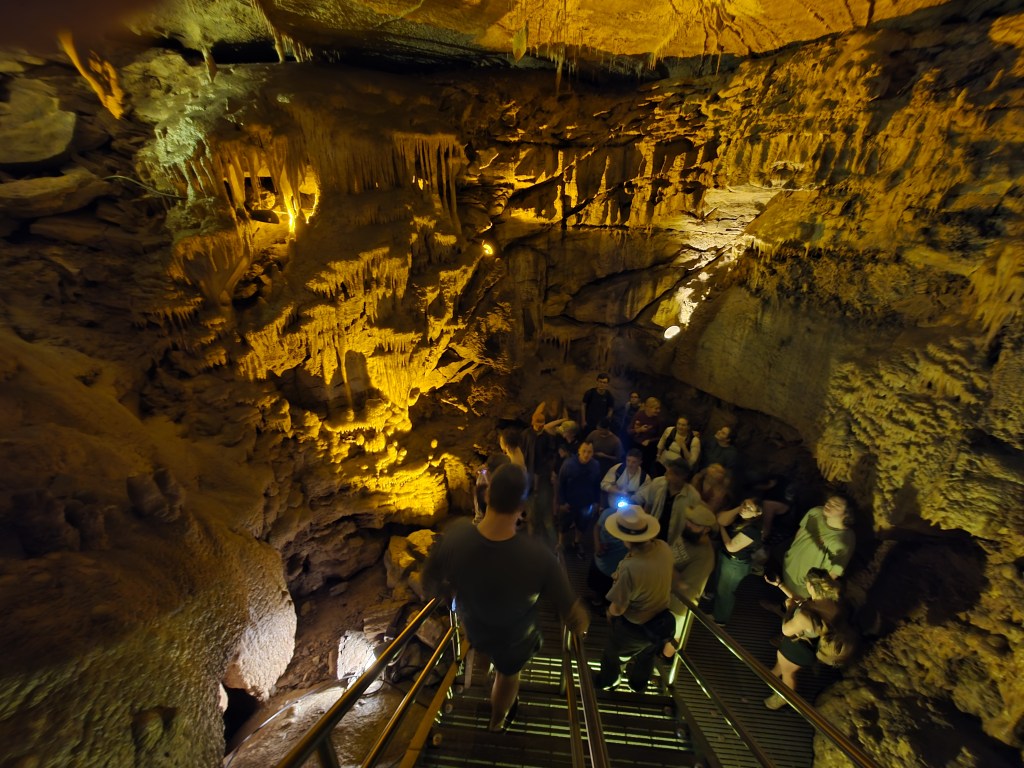
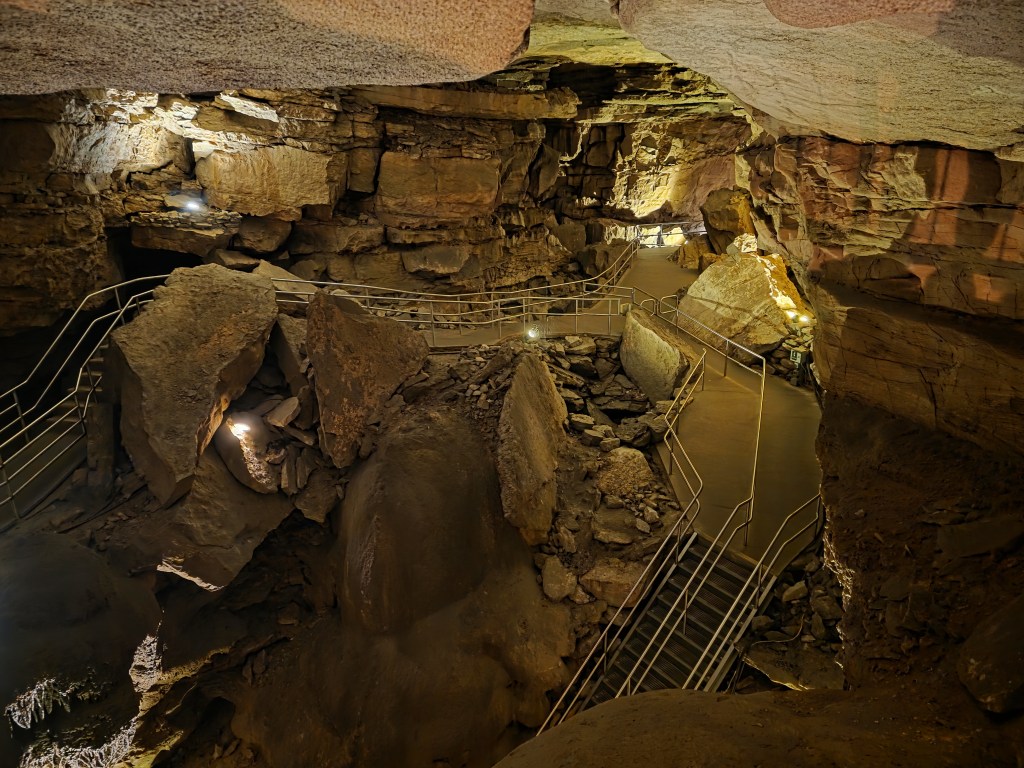
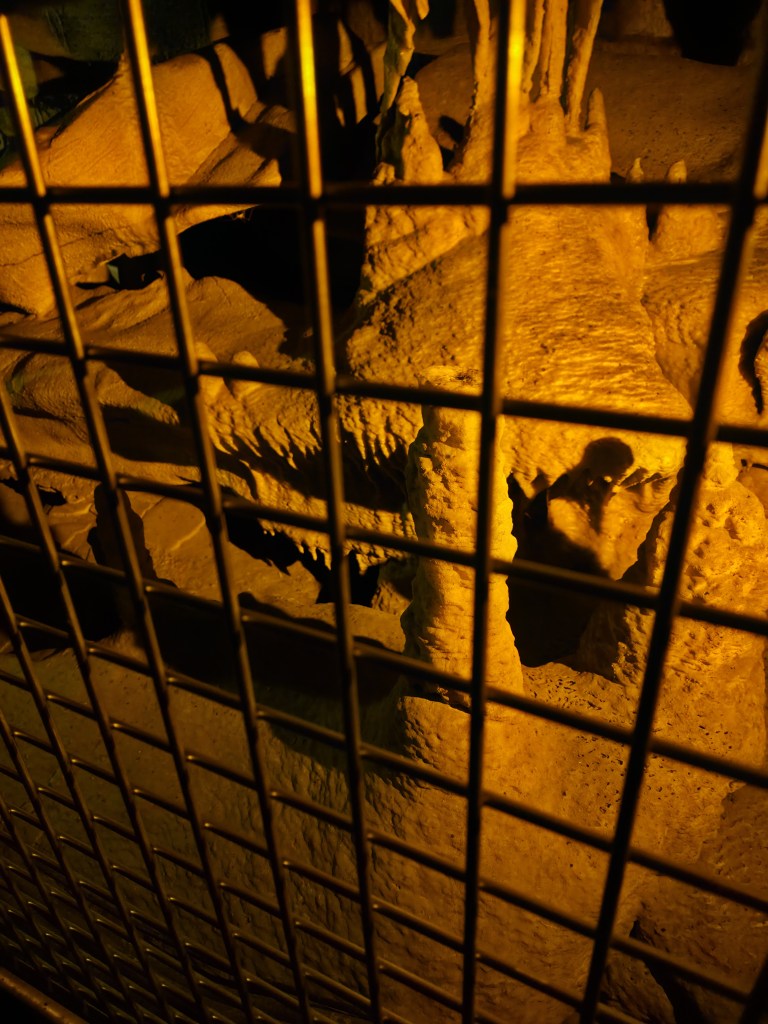
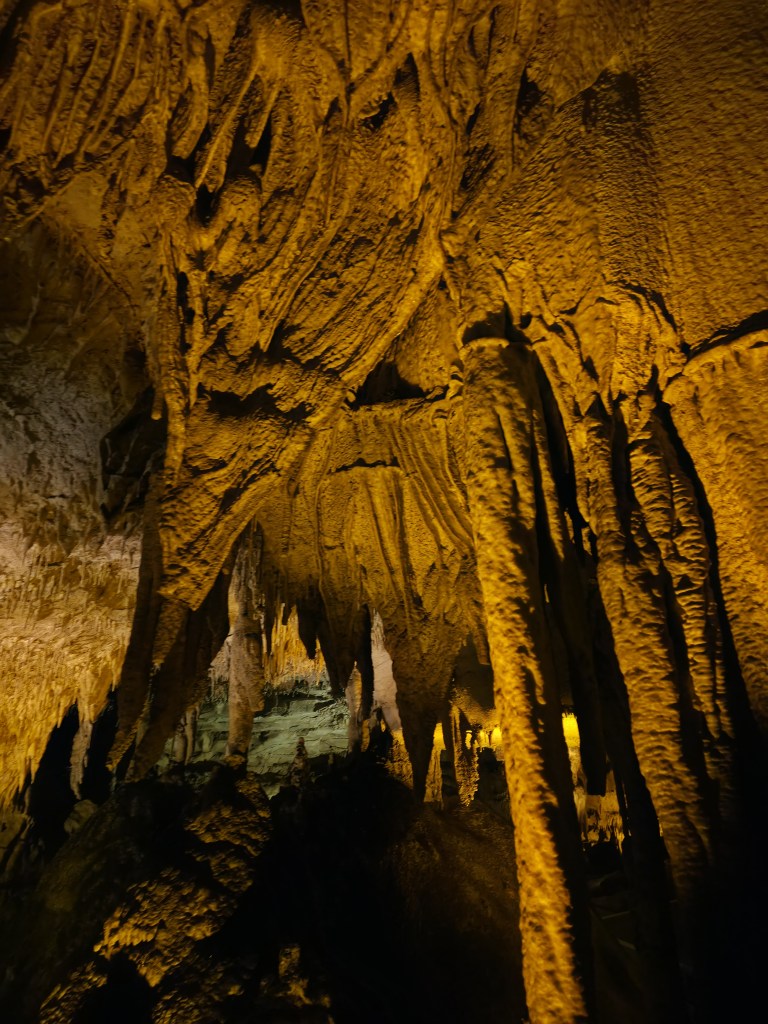
Like Kentucky, I didn’t know a ton about Mammoth Cave, and still don’t. I went there with an indifferent attitude of hoping something would jump out at me. I can’t say the experience was awesome. But I’m not denigrating those who are mesmerized by Mammoth Cave National Park or any other cave system. It’s just that I’ve never spelunked into caves with ropes and a headlight. I’ve only experienced caves in a very artificial manner, that is, with fluorescent lights, stairs and railings on a guided tour. That makes them all feel the same. If I never do the Domes and Dripstones tour again, I’m cool.
You can see the photos I took of this area below.
However, let me be fair to anyone who loves this area. Let me describe what I did like most. It is a place that would draw me back because the land seemed so lush and wild. All trees within and without the park were green as can be.
Yes, the air was thick with heat, humidity and mosquitos, and the ground covered with brush and poison ivy. I’m sure ticks abounded too. But this also means that God did intend things to grow in Kentucky, and they most certainly do, and that is a cause to love the land.
It is.
Sweating while standing and waiting outside the cave entrance, which is at the bottom of a little sinkhole, beech, oak and poplar trees rose above us tourists to create a canopy that blocked out most of the sky. The thick forest spread out for many miles in all directions. Intermittent sunlight glimmered on wet leaves. The whole scene felt like a jungle.
A majority of the trees within the Park are second generation forest, as, before this part of Kentucky became America’s 26 national park on the 1st of July 1941, the land had been cleared for farming. The Civilian Conservation Corps in the 1930’s replanted many trees on lands that were acquired from willing sellers and from unwilling sellers through eminent domain. Those trees have grown tall the past 90 years.
Sweating in that little hollow afforded me a glimpse of why Daniel Boone considered the Kentucky Wilderness as his wet and wild mistress. I imagine the virgin forest he saw there in 1775 was inspiring. Oaks, hickories, tulip poplars, beach, maple, elm, so on and so forth, were growing huge since time immemorial. These wild hills hosting large game herds no doubt made many men feel a lust to kill and eat something tasty.
I guarantee more than a few Scots-Irish walked west through the Cumberland Gap and became enchanted by the rich soils in these wet woods of America’s soon-to-be 15th state. It would be neat to find a spot out that way which can still make you feel that pioneering lust.
So, yeah, random moments can create the most lasting impressions, and this impression makes me wanna read about Daniel Boone.
And I certainly will.


Charley,
Another interesting article and fantastic pictures. How was all of that formed? Water or earth movements? How far down into the earth did you go? Is it all stable?
I t was good talking with you the other day and hearing your news. Call any time.
Take care,
Gary
LikeLike