Living out of a truck can be hard. Sleeping, cooking, reading, or doing any other simple task becomes an increased effort. That increased effort accumulates aggravation. It catches up with you. It can make you moody, especially if you’re staying in a steamy jungle without air conditioning.
That’s what north of Kansas City felt like. Good gosh. The night was hot and humid. Mosquitoes attacked, while trucks roared on the highway all night long.
I tried to get comfortable sleeping in the front passenger seat of my Tundra. But I couldn’t. Sleeping in the bed just wasn’t an option, and the worst part was the pain in my lower back. The older I get, the harder hoboing becomes.
But I can take lots of pain, and I did manage to get three to four hours of shut-eye. Even if I wanted more, at the dawning of this Tuesday the 9th of June in the year of our Lord 2026, sleep was no longer possible. Sleeping in daylight is impossible for me. Nor would it be necessary because I was feeling excitement.
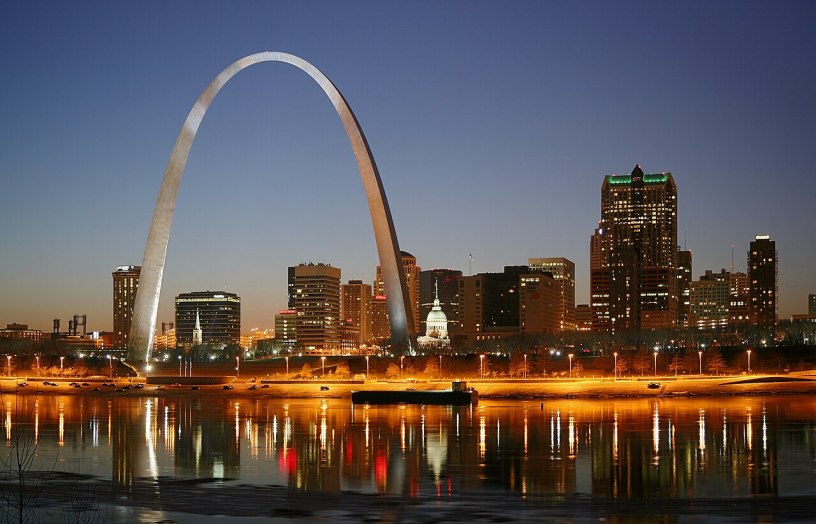
Now, once, I’d driven from the St Louis area to Kansas City along I-70 before. But I’d never seen St Louis itself. Just the northern suburbs at night. Today I would see that Arch – and I really wanted to see that Arch.
It’s a very American thing to see, and let me explain why.
To those who don’t know, the 630 foot-tall Gateway Arch was completed, after decades of planning, in 1965. It’s ultimate purpose is to remind future generations that St Louis, once upon a time, was the Gateway to the West and, by default, there was also this thing called “the West” in the first place.
After all, in this 21st century, we are already witnessing a great forgetting of the 20th century, and the forgetting of the 19th is largely completed. Of course, many alive today can recall terms like “Louisiana Purchase” or “Lewis and Clark” or “Thomas Jefferson”, but they can’t tell you when the War of 1812 began or who’s buried in Grant’s Tomb.
I’m not trying to sound like a jerk, but I’m also not exaggerating. Most of American History has already been forgotten. That forgetting has played a large role in adrifting us to the chaos of today. We are deracinated. We are without roots and therefore vulnerable to the changing winds of evil doctrines that take our civilization into despotism and despondency.
But the subject of deracination is for another post. I intend to take this one another way. I wish to give an example as to why I do have passion for American History and Geography, and why that passion motivated me to drive hundreds of miles out of my way.
I understand many wouldn’t care what some bloke in Arizona has to say about anything. My pronouncements aren’t a high priority to the reading world. But if you’re reading my blogs, maybe you understand that I’m trying to teach interesting things in a unique way, and though I’ve not figured out yet how to make my words interesting to more readers, I’m trying.
I am trying… and doing.
Now, at St Louis, Missouri the Mighty Missouri River finishes its approximate 2,500-mile-long path and flows into the Mississippi River. As with the Colorado River, the Missouri is also born of snowmelt in the Rocky Mountains. It is born where the Jefferson, Madison and Gallatin Rivers, which start fairly close to Yellowstone National Park, come together at Missouri Headwaters State Park in Montana. Below is a BEAUTIFUL map of the Missouri River Basin, which, of course, includes its may tributaries also born in the Rockies:
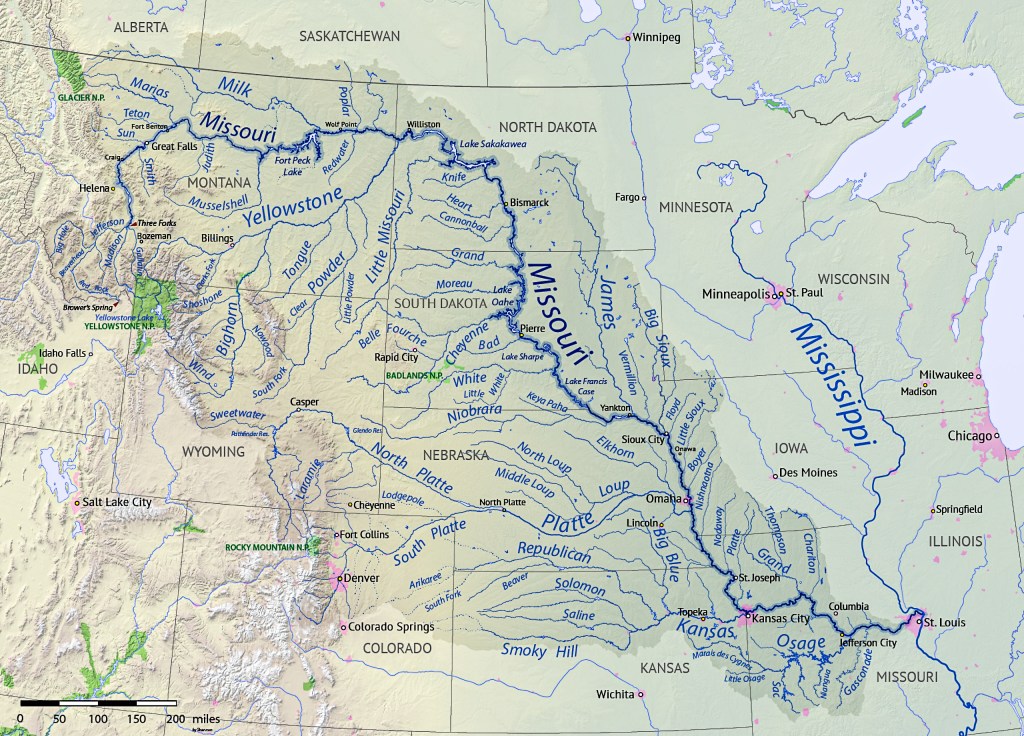
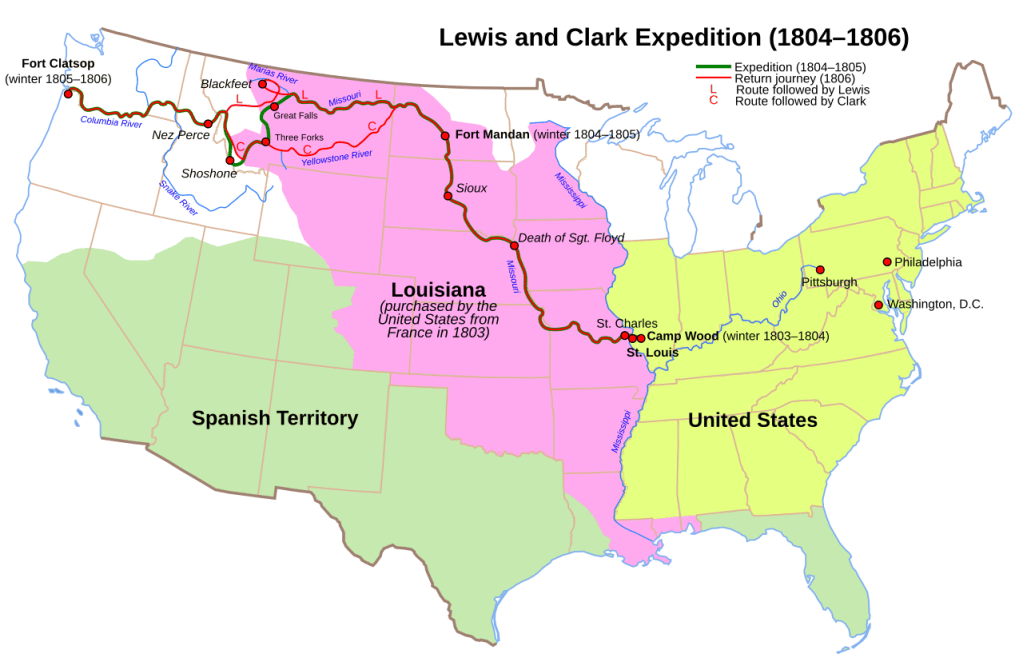
At St Louis thus began Lewis and Clark’s epic journey of discovery in the year of our Lord 1804. They would follow the path of the Missouri, by pushing their boats upstream against the current with poles, to the Missouri’s headwaters in the Rocky Mountains of what we now call Montana. Over what is now Lemhi Pass, right on the Montana-Idaho border, they would cross the Continental Divide, and follow streams flowing westward to the Columbia River and, ultimately, to the Pacific Ocean. St Louis is where their journey would also end, as returning here meant returning to civilization.
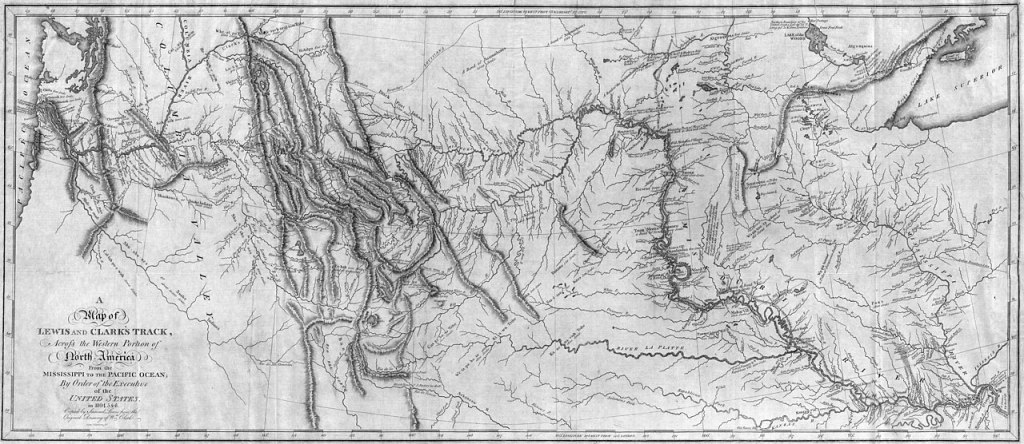
Below is an 1814 map, the first official map, created from the Lewis-and-Clark led Corps of Dicovery:
Below is a more modern and understandable map:
My love of the story of Lewis and Clark is rooted in the countless masculine virtues all the men of that famous showed. Determination, endurance, longsuffering, grit, and sheer undaunted courage should excite the minds of every American boy. Lewis and Clark should be heroes to every American. They should be far more known than the influential trash that governs our culture today.
Lewis and Clark were the first to find a path from sea to shining sea. No one had ever so ventured before. These two men proved it was possible. They set in motion a continent-changing force that brought the blessings of American Civilization to a gigantic portion of North America. They did their part to make what is now the United States of America a great land filled with great people, and praise God for the gift of America’s greatest visionary named Thomas Jefferson who sent Lewis and Clark to St. Louis in the first place!
I can’t image there is a better book on Lewis and Clark than Stephen Ambrose’s Undaunted Courage. I certainly could say much more on them, and I will in later posts (especially the one where I cross the Continental Divide at Lemhi Pass). But, this post is an homage to Saint Louis and its Gateway Arch for the awesome role this part of Missouri played in making America great.
At St Louis was also the base of operations for the fur trading enterprises that would send Mountain Men up the Missouri into the Rocky Mountains and further westward into the Oregon country, much as Lewis and Clark did. But Mountain Men did more. They also followed the many Missouri tributaries – like the Yellowstone, Little Missouri, Niobrara and Platte – to their Rocky Mountain sources and, in so doing, found many other passes and paths across the West, from the Great Plains to the Pacific Ocean. Those paths would later become the Oregon Trail its spur trails like the Utah (or Mormon) Trail, the California Trail, the Bozeman Trail and countless spurs that led to settlement of isolated wildernesses into statehood so they could become constituent members of the United States of America.
And, yes, at St Louis also began the journeys of the literal hundreds of thousands of westward-bound pioneers. Granted, they didn’t follow the Missouri the entire way like Lewis and Clark did. Actually, most only followed the Missouri a little. They followed the Missouri River, by steamer, across the state of Missouri to Independence in the vicinity of what is now called Kansas City. From there they followed to Oregon Trail westward towards the Rockies and also took other trails to settle states from the Great Plains to the Pacific Ocean. But the journey of nearly all those brave souls began at the logistical hub of St Louis, and the purpose of that Gateway Arch on North Fourth Street, again, is to remind us Americans of the fact that St Louis truly, truly was where the West began once upon a time.
Below is a photograph of a WONDERFUL map I found in a book called The Indian Wars which shows all those trails from St. Louis and Independence to the Great West:
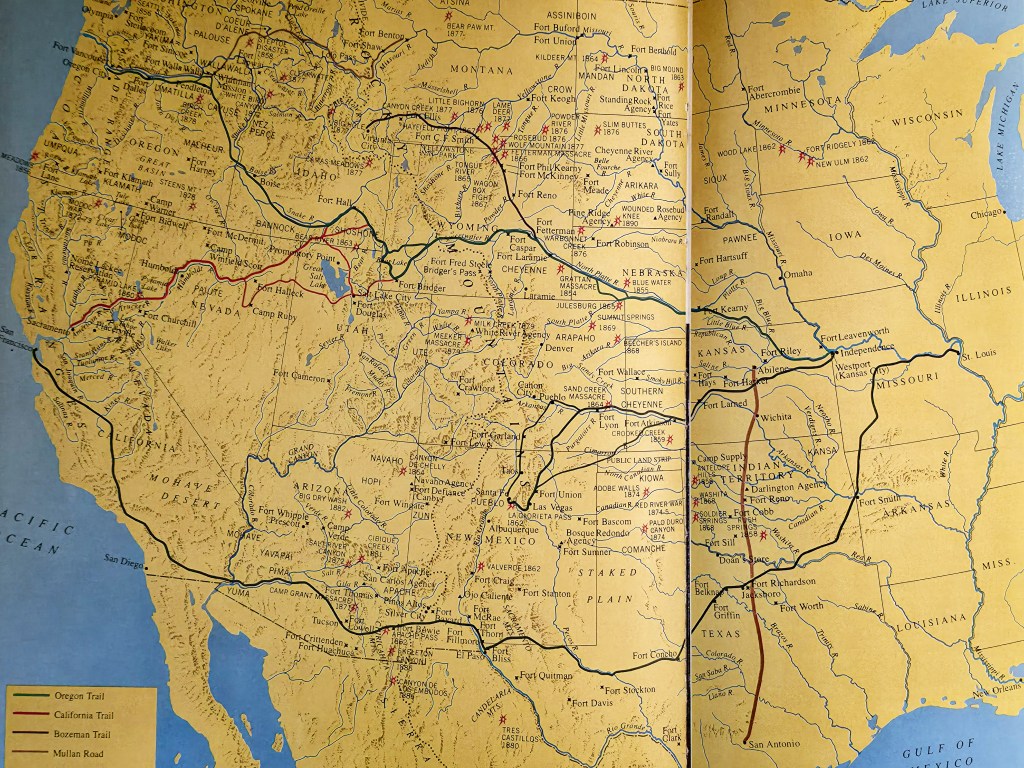
Essentially, the reports of Lewis and Clark led to the investment in-fur trapping enterprises which paid Mountain Men to trap beaver pelts in the pristine streams of the Rocky Mountains. Those Mountain Men, like Lewis and Clark, would use the Missouri as the main path west, but would also get off the Missouri to follow and trap its tributaries as well. Over time, as those Men trapped out those pristine streams, they also discovered the best routes and passes which settlers would later follow into California and the other golden lands along the way promising a rich bounty of God’s goodness which He did deliver.
So, by God, I had to see the St. Louis Arch. I did.
Now, really quick, it is not that I’m some zealot Of American patriotism, at least as most people understand American patriotism. Some would probably call me a traitor actually because I believe the Liberty God gave man demands allegiance over governments and especially flags. In so much as the flag is a symbol of tyranny and not His Libery, we should choose Liberty over a flag. But that’s another discussion.
My point is that I love so much what brave, honorable and Christian men and women did in the 19th century to make my life in the 21st century so much better. I love the history of the United States of America so much. Without these Trail Blazers, and without those willing to sacrifice everything so future generations could have better lives, what would the United States of America be right now?
I don’t know. I can’t know. But I can remember, at least a little, that once upon a time in the West, well, that West began at St Louis, Missouri. To me, St. Louis seems like the cultural heart of America, and maybe it is.
It may be America’s most cardinal city – and, yes, I do wonder if those who created a baseball and a football team had similar thoughts.
Regardless, as I somewhat groggily got into the driver’s seat at the truck stop on I-29 north of Kansas City, smelling wonderfully, I was kind of fired up. I’m not saying I would have driven a thousand miles out of the way to see the Gateway Arch. But definitely hundreds.
FEATURED IMAGE FROM:
commons.wikimedia.org/wiki/File:St_Louis_night_expblend.jpg
MISSOUR RIVER BASIN MAP FROM:
thumb.wikimedia.org/wikipedia/commons/thumb/f/ff/Missouri_River_basin_map.png/ 1280px-Missouri_River_basin_map.png?utm_source= commons.wikimedia.org&utm_ campaign=index&utm_content=thumbnail
1814 LEWIS AND CLARK EXPEDITION MAP:
thumb.wikimedia.org/wikipedia/commons/thumb/6/6c/Map_of_Lewis_and_Clark%27s_ Track%2C_ Across_the_Western_Portion_of_North_America%2C_ published_1814.jpg/1280px-
Map_of_Lewis_and_Clark%27s_Track%2C_Across_the_Western_Portion_of_North_America%2C_
published_1814.jpg?utm_source=commons.wikimedia.org&utm_campaign=index&utm_content=thumbnail
LEWIS AND CLARK EXPEDITION MAP:
thumb.wikimedia.org/wikipedia/commons/thumb/f/f0/Lewis_and_Clark_Expedition_map .svg/1280px-Lewis_and_Clark_Expedition_map.svg.png?
utm_source=commons.wikimedia.org&utm_campaign=index&utm_content=thumbnail


Charlie,
Good article. Informative and well written. I’m enjoying your trip across the country. Hope all is well.
Gary
LikeLiked by 1 person